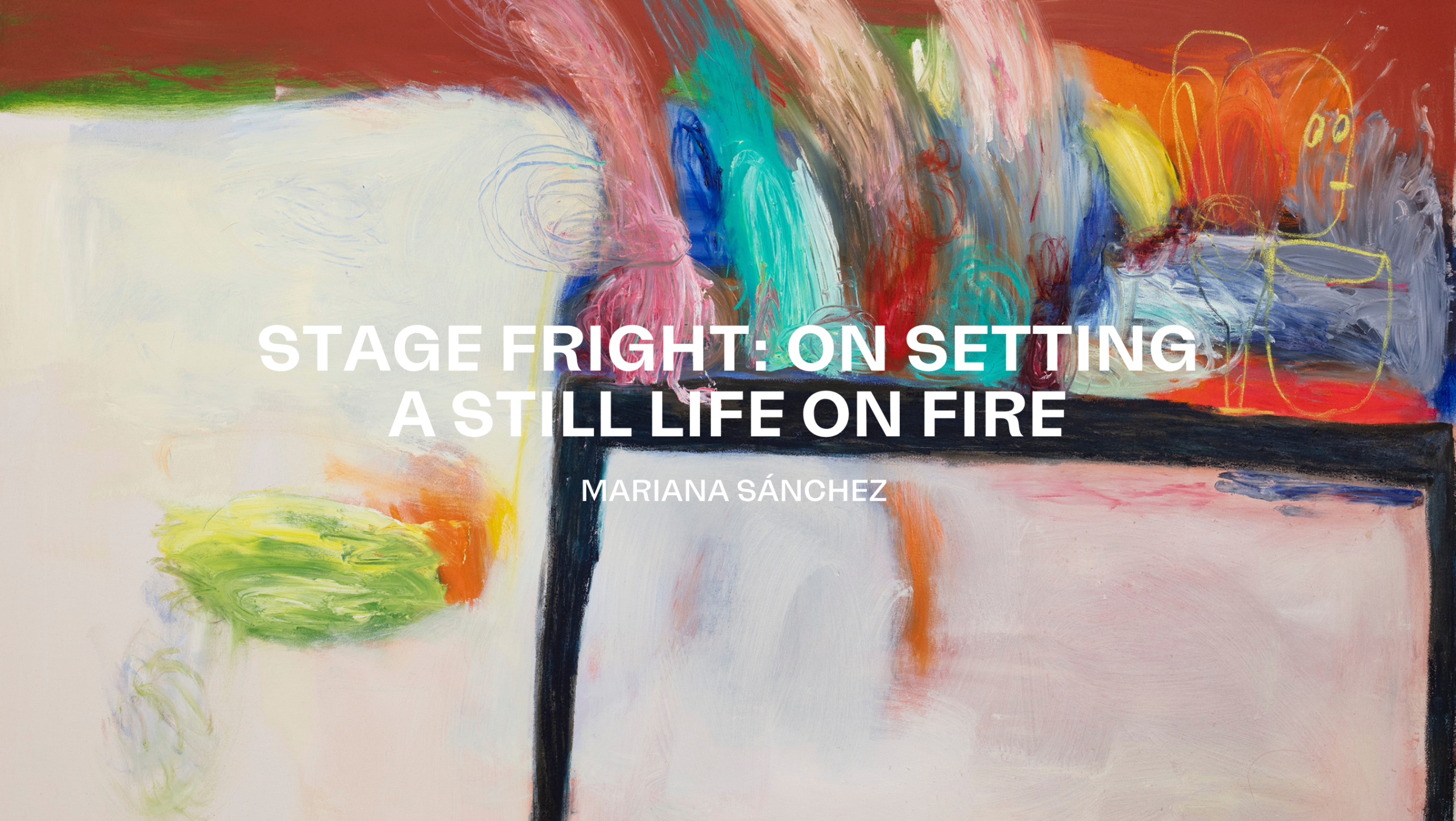
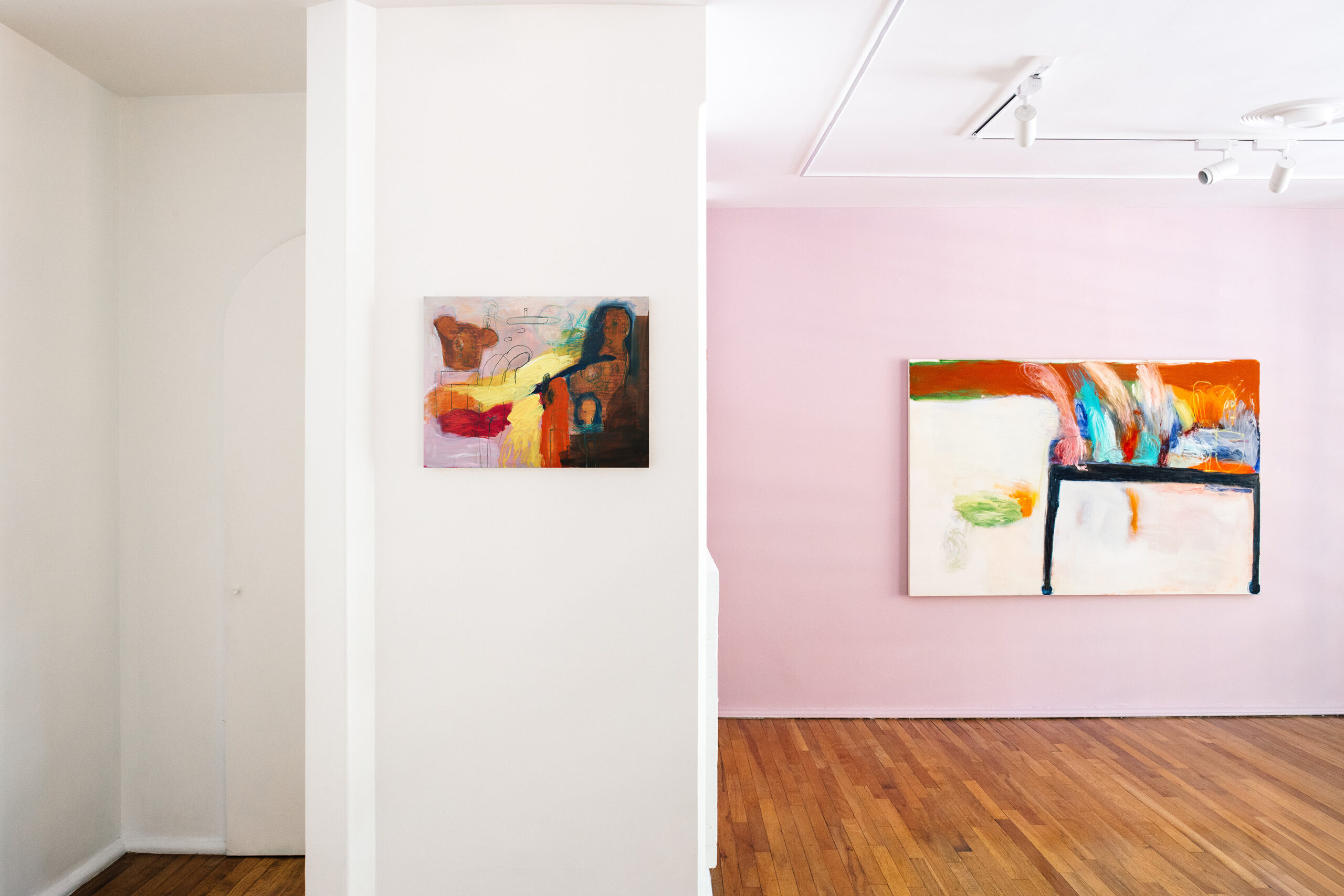
Influenced by Miriam Cahn, James Ensor, Rita Ackermann, Gilberto Aceves Navarro, Cy Twombly, Louise Bourgeois, and others, Sanchez deploys a visceral application of paint and constructs scenes that oscillate between the intimate and the perturbing. Thus transforming relationships and quotidian gestures into encounters loaded with a tension that appears to resist any type of containment. This idea is further emphasized through a persistent sense of hybridity. Figures drift between the human and the animal, or surrender entirely to the animalesque, and in doing so introduce instinctual forces that subvert codes of domesticity in favor of operating according to their own unruly rhythms. These parallelisms with the animal world extend beyond subject matter and seep into the very language of the paintings themselves. At times, Sánchez’s approach becomes almost cartoonesque, historically linked to satire, while elsewhere it adopts a child-like immediacy that heightens the absurdity embedded within everyday life. Through playful yet psychologically loaded compositions, she gravitates toward gestural and humor-inflected abstraction, portraying domestic encounters as scenes suspended between tenderness, discomfort, irony, and disorder.
Echoing her background, Sanchez’s compositions feel theatrical and carefully staged, with tables becoming sites of gathering or rupture, interiors suggesting unspoken routines, and figures inhabiting spaces that blur the line between performance and reality. Meanwhile, the domestic emerges as both backdrop and protagonist —at once familiar and psychologically layered, while also profoundly rooted in memory, affect, and the quiet tensions of a shared life. Painting from lived experience, Sánchez approaches the canvas intuitively, allowing scenes to develop through accumulation. Sánchez’s path into painting came about after an early focus on architecture and scenic design, disciplines that sharpened her sensitivity to space, composition, and atmosphere.
Approaching painting as both a stage and a confrontation, she crafts works that question the inheritance that comes with academic oil painting by highlighting its gendered production history and subject matter via grappling with the feminine and domestic subject matter on canvas. Constructing bridges between portraiture and landscape, her paintings constantly toe the line that separates abstraction from figuration through an expressive pictoric language that asks viewers to parse out meaning through an attentive reading of detail. In this sense, each painting becomes a site where memory, bodies, instinct, space and even myth collapse into one another, transforming fragments of lived experience into emotionally charged tableaux where intimacy mutates into theater, domesticity slips into absurdity, and the familiar reveals something far more feral, unstable, and psychologically exposed.