


Conceived as an echo chamber, MEMBRANAS EN RESONANCIA carefully unfolds the unstable territory between material condition and conceptual space by engaging with practices that understand bodies and the world that surrounds them as permeable systems in constant transformation. Bringing together the works of Elise Guillaume, Daniela Terroba and Carolina Fusilier, whose practices unsettle the boundaries that seem to be ingrained in our understanding of the world, the exhibition attends to the porous interrelationships that allow biologic, technologic and affective flows to meet.
Employing varied artistic languages and mediums –from painting, sculpture and ceramics, to video, sound and installation– these artists belong to a continuum of makers who treat bodies, environments and materials as fluid systems rather than bounded entities. Understanding their practices as investigations of thresholds, that which is at once limit, passage and portal, Guillaume, Terroba and Fusilier focus on the creative potential of each porous encounter as a condition that mediates, filters, exchanges, and transforms.
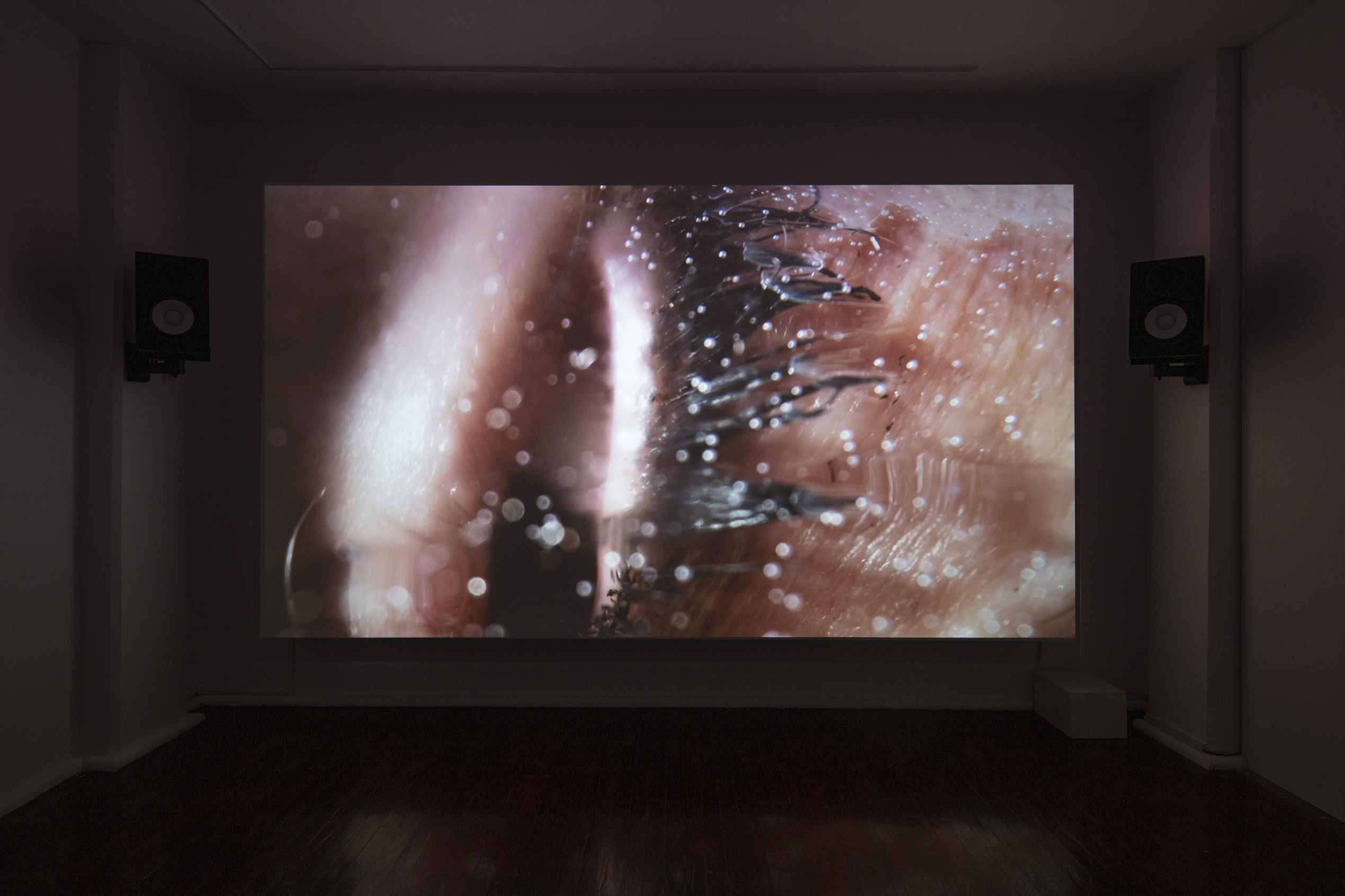
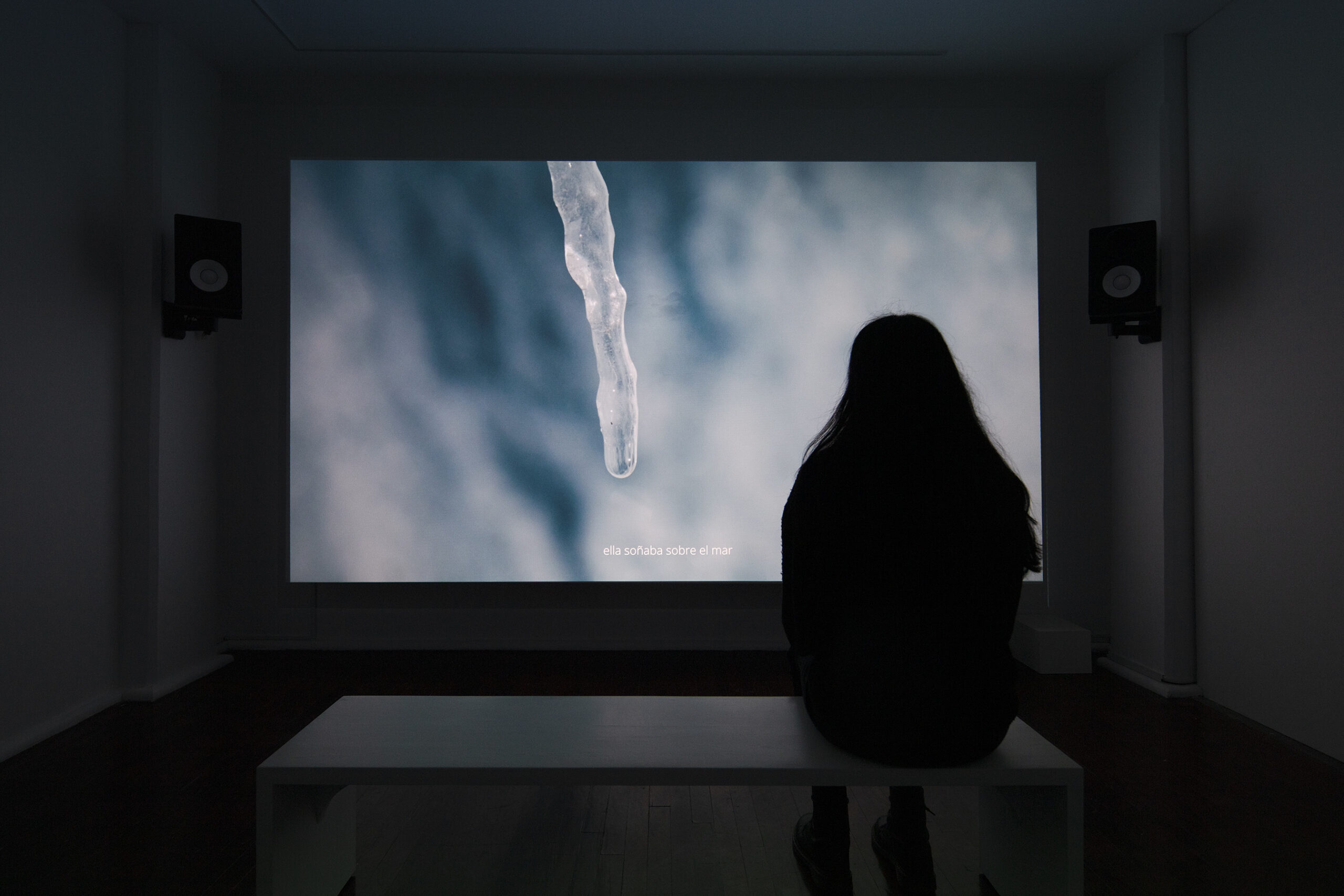
Moving between film, sound, sculpture, photography and immersive installation, Guillaume extends interiority towards a relational dimension. She explores the connection between psychological states and environmental change by weaving scientific inquiry with personal experiences to make visible how the ocean and the ecosystems we are part of affect our emotional lives. Recognising the body as a point of connection between human experience and the more-than-human world; and employing image, sound and matter, Guillaume delves into a shared sensibility in which the human is always entangled within a wider network of interdependencies beyond the visible. She often begins a project with fieldwork in specific environments such as the Arctic, the North Sea or the Atacama Desert; a process that allows different forms of knowledge, experience and observation to inform one another. Material transformation is central to Guillaume’s practice, rather than representing ecological systems she turns towards and listens to their gestures, traces and rhythms, which become embedded into the pieces themselves. Field recordings of a glacier melting are woven into an intimate meditation on grief, while seaweed from the North Sea is carefully transformed into translucent portals that oscillates between the bodily, the womb-like, the sculptural and the affective through processes of molding and suturing. Water, words, sound and membranes recur across her work as elements of an ongoing exploration into embodied language and ecological interdependence.
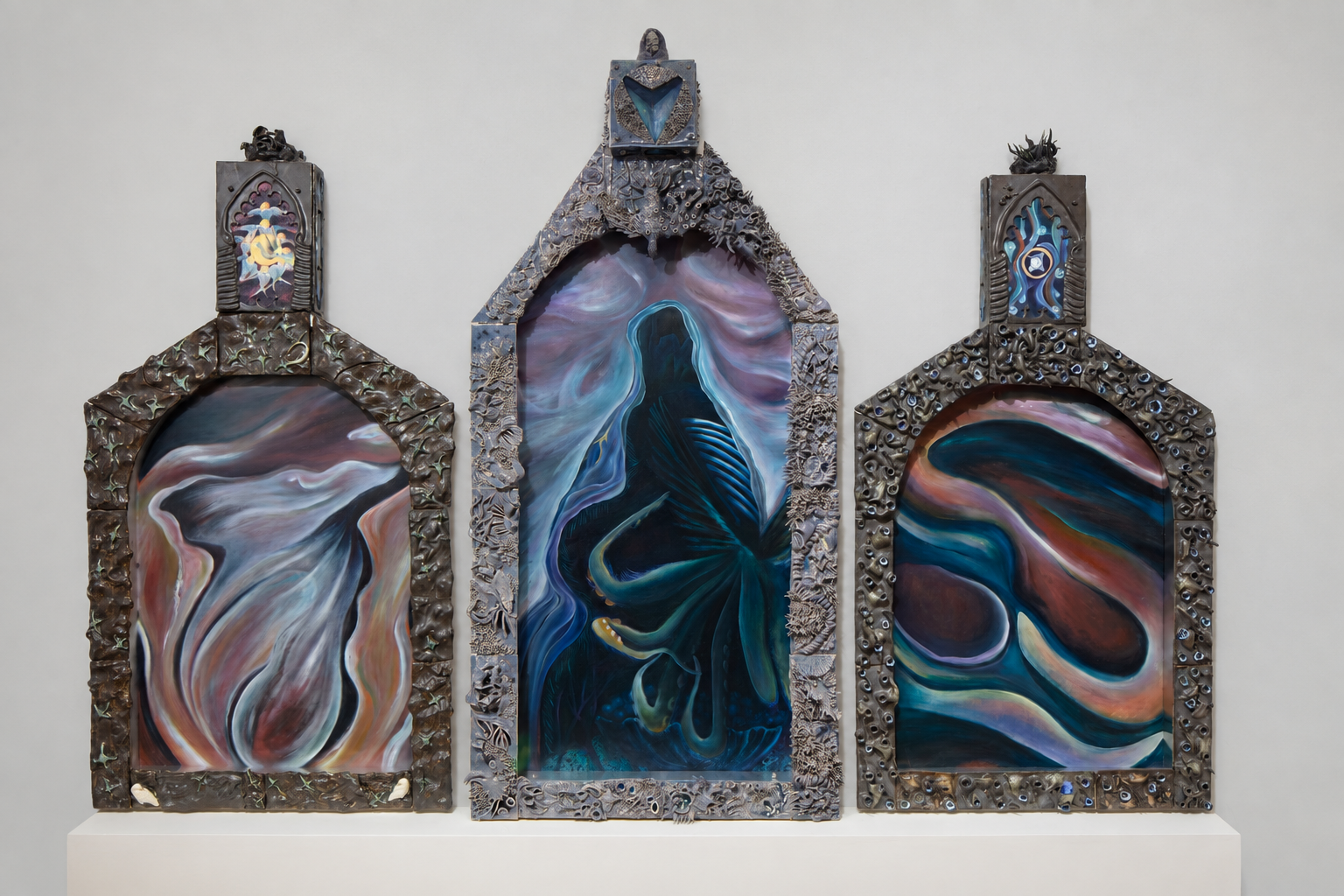
Focused on internal or porous spaces, Terroba’s works develop associative chains that jump from forms like the fetus to the womb, the cave, the egg, the spiral, the conch, the sea, and more; configuring a visual universe that interweaves the anatomical and symbolic. Allowing figures to dissolve into the non-human, her surfaces become membranes through which form continually emerges and recedes. A cavity in expansion, or perhaps a space where form folds in on itself, the body in her works gives birth to imaginaries that oscillate between the anatomical, the cosmological, and the abyssal. She draws upon symbols such as the Madonna or the incarnation of Christ as a way to continue unsettling inherited ideas of certainty and, above all, out of a deep desire to conjure ambiguous corporealities whose origins remain hidden and mutable. Infused with references to marine biology and open to a dialogue with belief, the occult, eroticism, and fiction, her works are meticulously built in the tradition of retablos and predelas: panels made for candlelight and chapel dusk, where the penumbra is inhabited and gestation in ambiguous darkness is made present. Ethereal and primal, her paintings become windows through which we glimpse what is both hidden and revealed. Whilst layers of dynamic material obscure and disclose at once, transparency itself carries a symbolic weight. In the space between revelation and concealment, Terroba crafts a sensory web that privileges the melding of sight and sound.
This permeability finds an echo in Fusilier’s practice, which extends it into technological, historical, and speculative realms where matter, memory, sound, and the pictorial circulate across unstable temporal boundaries. Drawing from contextual research and fieldwork, she constructs open-ended narratives in which fact, fiction, and possibility keep each other at a simmer. Through explorations that conjure these tensions, she activates non-linear temporalities to speculate on forms of existence beyond the human, while questioning how images produce and modulate reality. Addressing the frictions and continuities between organic and mechanical bodies, she opens posthuman imaginaries where objects, machines, and infrastructures embody an agency of their own, and often, render visible the porosity between the living and the artificial. Operating like visions of speculative worlds, her mysteriously lit and ambiguous environments, populated by imagined systems, spaces, technologies, and apparatuses render visible the hidden orders that usually escape the eye and sustain the world. This gesture is inseparable from impermanence, for in works like her paintings Las Inmortalistas or her film Ciudad Metabólica every scene carries the seed of its own passing. Through abstract forms that recall circuits, and a palette of twilight and ash, she crafts potential realities that are not so much futuristic as untimely: worlds at once ancient and imminent, imbued with the certainty of their own passing. Through repetition, layering, fragmentation, and reinterpretation, Fusilier displaces the anthropocentric gaze and opens indeterminate zones of contact inhabited by ambiguous presences that oscillate between memory, fiction, and future possibility.
In dialogue with one another, Guillaume, Terroba and Fusilier’s works trace a continuum between the intimate and the systemic, the ancestral and the speculative, the organic and the machinic. Resisting firm boundaries, their practices share a focus on that which eludes immediate perception, what seems to vibrate beneath the surface, what transforms in silence, or what persists in the realm of the invisible. In all three practices, the spaces of contact where inside and outside, self and environment, organic and technological, reality and fiction meet are continually negotiated and transformed. At this intersection, the thresholds they explore emerge not merely as formal elements, but as resonant modes of knowledge that challenge the linear and the representational.
Rather than constructing a closed narrative, MEMBRANAS EN RESONANCIA is conceived as a space of transit where the artworks function as sensitive interfaces, inviting us to perceive the multiple layers that constitute reality.Bringing together the works of Elise Guillaume, Daniela Terroba and Carolina Fusilier, whose practices unsettle the boundaries that seem to be ingrained in our understanding of the world, the exhibition attends to the porous interrelationships that allow biologic, technologic and affective flows to meet. Employing varied artistic languages and mediums –from painting, sculpture and ceramics, to video, sound and installation– these artists belong to a continuum of makers who treat bodies, environments and materials as fluid systems rather than bounded entities. Understanding their practices as investigations of thresholds, that which is at once limit, passage and portal, Guillaume, Terroba and Fusilier focus on the creative potential of each porous encounter as a condition that mediates, filters, exchanges, and transforms.
Moving between film, sound, sculpture, photography and immersive installation, Guillaume extends interiority towards a relational dimension. She explores the connection between psychological states and environmental change by weaving scientific inquiry with personal experiences to make visible how the ocean and the ecosystems we are part of affect our emotional lives. Recognising the body as a point of connection between human experience and the more-than-human world; and employing image, sound and matter, Guillaume delves into a shared sensibility in which the human is always entangled within a wider network of interdependencies beyond the visible. She often begins a project with fieldwork in specific environments such as the Arctic, the North Sea or the Atacama Desert; a process that allows different forms of knowledge, experience and observation to inform one another. Material transformation is central to Guillaume’s practice, rather than representing ecological systems she turns towards and listens to their gestures, traces and rhythms, which become embedded into the pieces themselves. Field recordings of a glacier melting are woven into an intimate meditation on grief, while seaweed from the North Sea is carefully transformed into translucent portals that oscillates between the bodily, the womb-like, the sculptural and the affective through processes of molding and suturing. Water, words, sound and membranes recur across her work as elements of an ongoing exploration into embodied language and ecological interdependence.
Focused on internal or porous spaces, Terroba’s works develop associative chains that jump from forms like the fetus to the womb, the cave, the egg, the spiral, the conch, the sea, and more; configuring a visual universe that interweaves the anatomical and symbolic. Allowing figures to dissolve into the non-human, her surfaces become membranes through which form continually emerges and recedes. A cavity in expansion, or perhaps a space where form folds in on itself, the body in her works gives birth to imaginaries that oscillate between the anatomical, the cosmological, and the abyssal. She draws upon symbols such as the Madonna or the incarnation of Christ as a way to continue unsettling inherited ideas of certainty and, above all, out of a deep desire to conjure ambiguous corporealities whose origins remain hidden and mutable. Infused with references to marine biology and open to a dialogue with belief, the occult, eroticism, and fiction, her works are meticulously built in the tradition of retablos and predelas: panels made for candlelight and chapel dusk, where the penumbra is inhabited and gestation in ambiguous darkness is made present. Ethereal and primal, her paintings become windows through which we glimpse what is both hidden and revealed. Whilst layers of dynamic material obscure and disclose at once, transparency itself carries a symbolic weight. In the space between revelation and concealment, Terroba crafts a sensory web that privileges the melding of sight and sound.
This permeability finds an echo in Fusilier’s practice, which extends it into technological, historical, and speculative realms where matter, memory, sound, and the pictorial circulate across unstable temporal boundaries. Drawing from contextual research and fieldwork, she constructs open-ended narratives in which fact, fiction, and possibility keep each other at a simmer. Through explorations that conjure these tensions, she activates non-linear temporalities to speculate on forms of existence beyond the human, while questioning how images produce and modulate reality. Addressing the frictions and continuities between organic and mechanical bodies, she opens posthuman imaginaries where objects, machines, and infrastructures embody an agency of their own, and often, render visible the porosity between the living and the artificial.
Operating like visions of speculative worlds, her mysteriously lit and ambiguous environments, populated by imagined systems, spaces, technologies, and apparatuses render visible the hidden orders that usually escape the eye and sustain the world. This gesture is inseparable from impermanence, for in works like her paintings Las Inmortalistas or her film Ciudad Metabólica every scene carries the seed of its own passing. Through abstract forms that recall circuits, and a palette of twilight and ash, she crafts potential realities that are not so much futuristic as untimely: worlds at once ancient and imminent, imbued with the certainty of their own passing. Through repetition, layering, fragmentation, and reinterpretation, Fusilier displaces the anthropocentric gaze and opens indeterminate zones of contact inhabited by ambiguous presences that oscillate between memory, fiction, and future possibility.
In dialogue with one another, Guillaume, Terroba and Fusilier’s works trace a continuum between the intimate and the systemic, the ancestral and the speculative, the organic and the machinic.
Resisting firm boundaries, their practices share a focus on that which eludes immediate perception, what seems to vibrate beneath the surface, what transforms in silence, or what persists in the realm of the invisible. In all three practices, the spaces of contact where inside and outside, self and environment, organic and technological, reality and fiction meet are continually negotiated and transformed. At this intersection, the thresholds they explore emerge not merely as formal elements, but as resonant modes of knowledge that challenge the linear and the representational. Rather than constructing a closed narrative, MEMBRANAS EN RESONANCIA is conceived as a space of transit where the artworks function as sensitive interfaces, inviting us to perceive the multiple layers that constitute reality.

Employing varied artistic languages and mediums –from painting, sculpture and ceramics, to video, sound and installation– these artists belong to a continuum of makers who treat bodies, environments and materials as fluid systems rather than bounded entities. Understanding their practices as investigations of thresholds, that which is at once limit, passage and portal, Guillaume, Terroba and Fusilier focus on the creative potential of each porous encounter as a condition that mediates, filters, exchanges, and transforms.

Moving between film, sound, sculpture, photography and immersive installation, Guillaume extends interiority towards a relational dimension. She explores the connection between psychological states and environmental change by weaving scientific inquiry with personal experiences to make visible how the ocean and the ecosystems we are part of affect our emotional lives.

Focused on internal or porous spaces, Terroba’s works develop associative chains that jump from forms like the fetus to the womb, the cave, the egg, the spiral, the conch, the sea, and more; configuring a visual universe that interweaves the anatomical and symbolic.


Fusilier’s practice extends into technological, historical, and speculative realms where matter, memory, sound, and the pictorial circulate across unstable temporal boundaries. Drawing from contextual research and fieldwork, she constructs open-ended narratives in which fact, fiction, and possibility keep each other at a simmer.
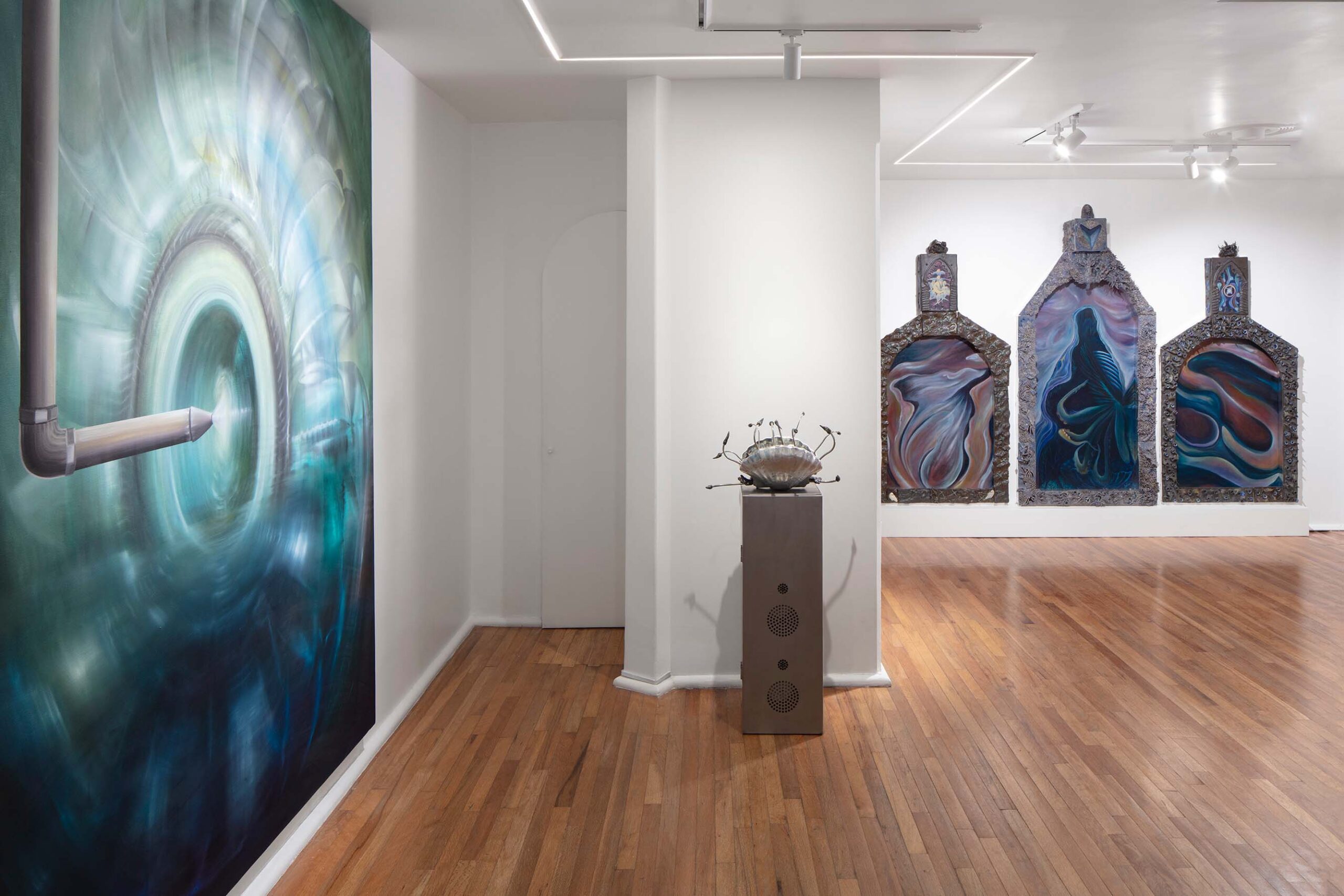
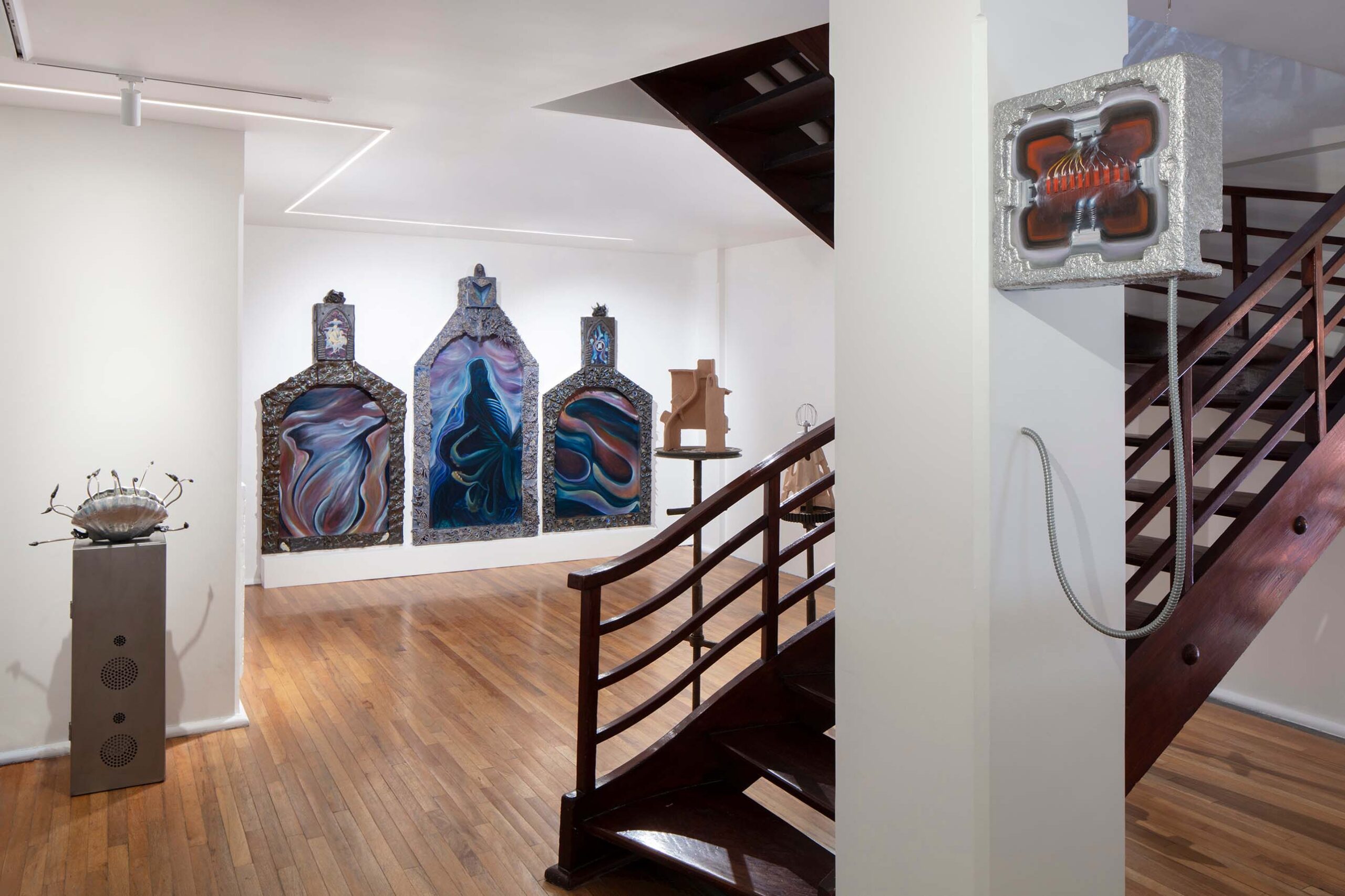
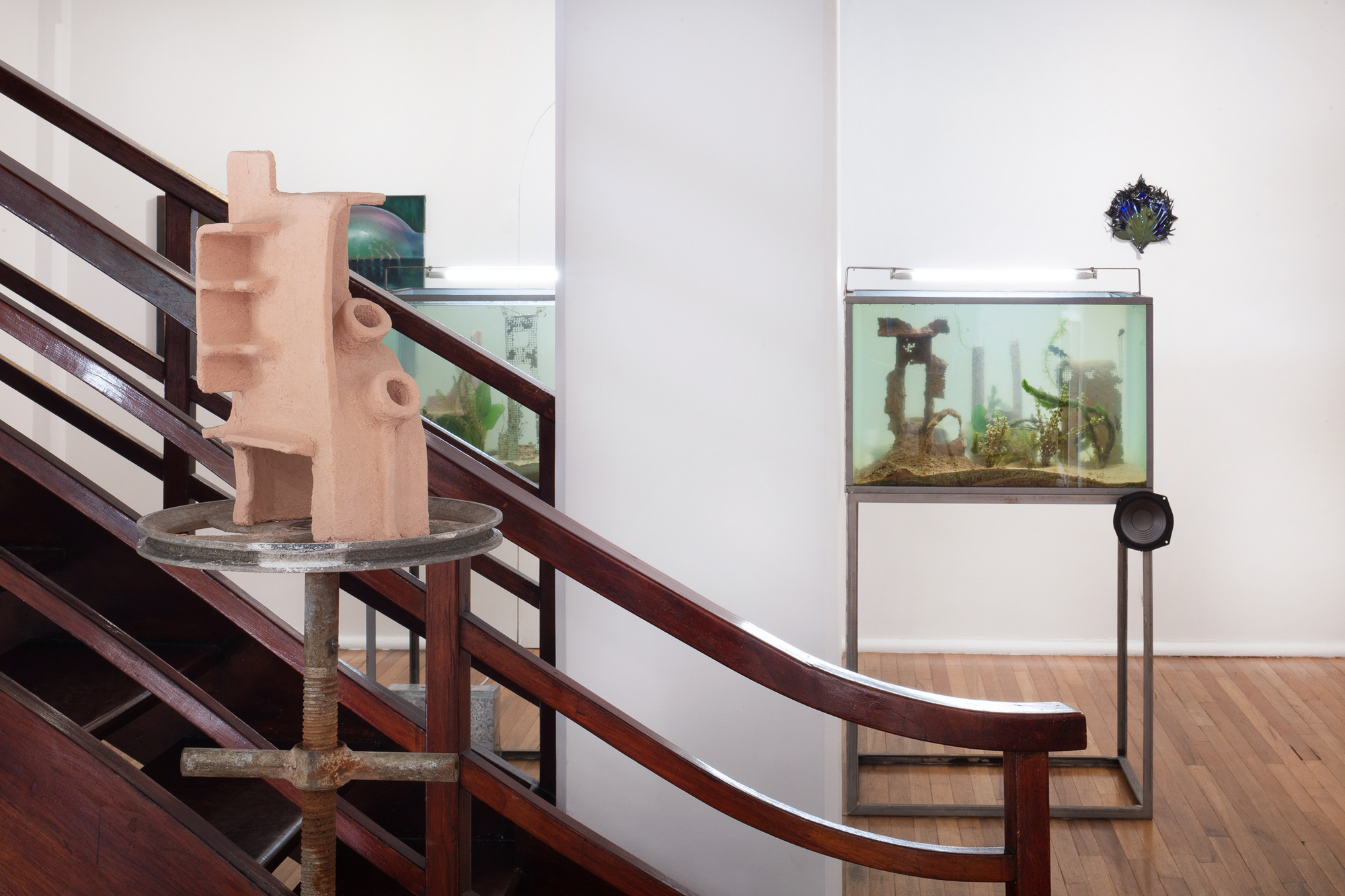

In dialogue with one another, Guillaume, Terroba and Fusilier’s works trace a continuum between the intimate and the systemic, the ancestral and the speculative, the organic and the machinic. Resisting firm boundaries, their practices share a focus on that which eludes immediate perception, what seems to vibrate beneath the surface, what transforms in silence, or what persists in the realm of the invisible.
ARTWORKS


