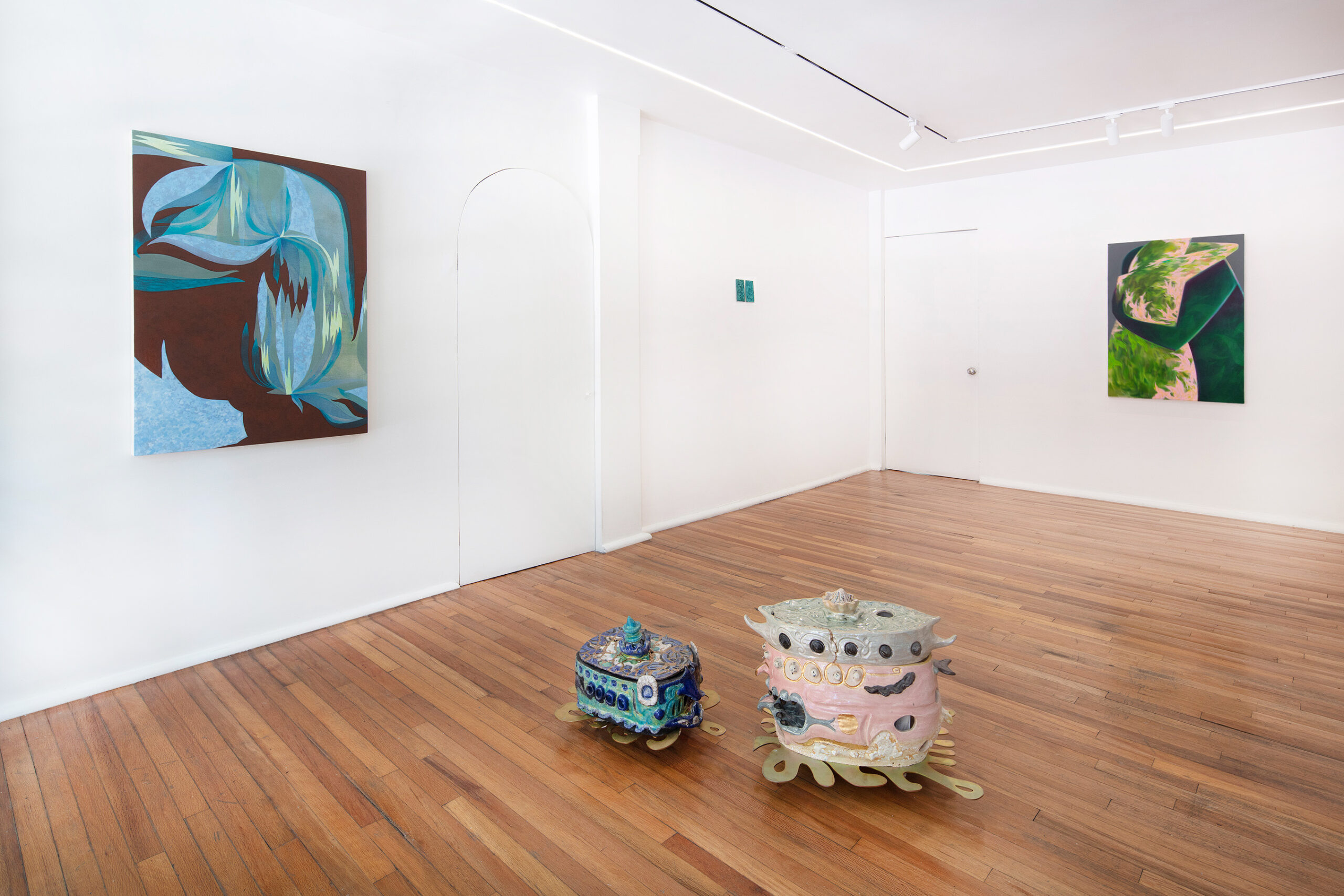
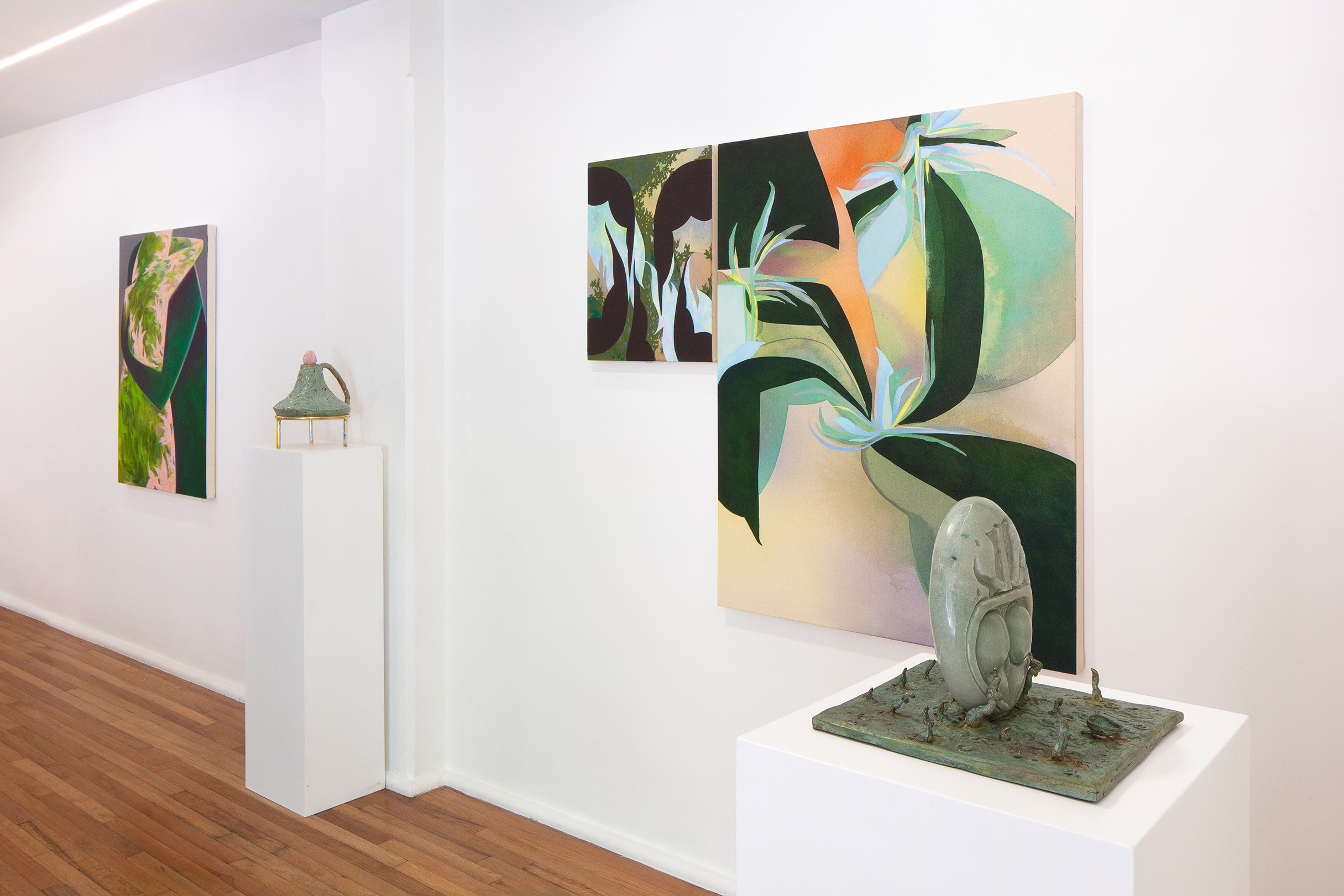
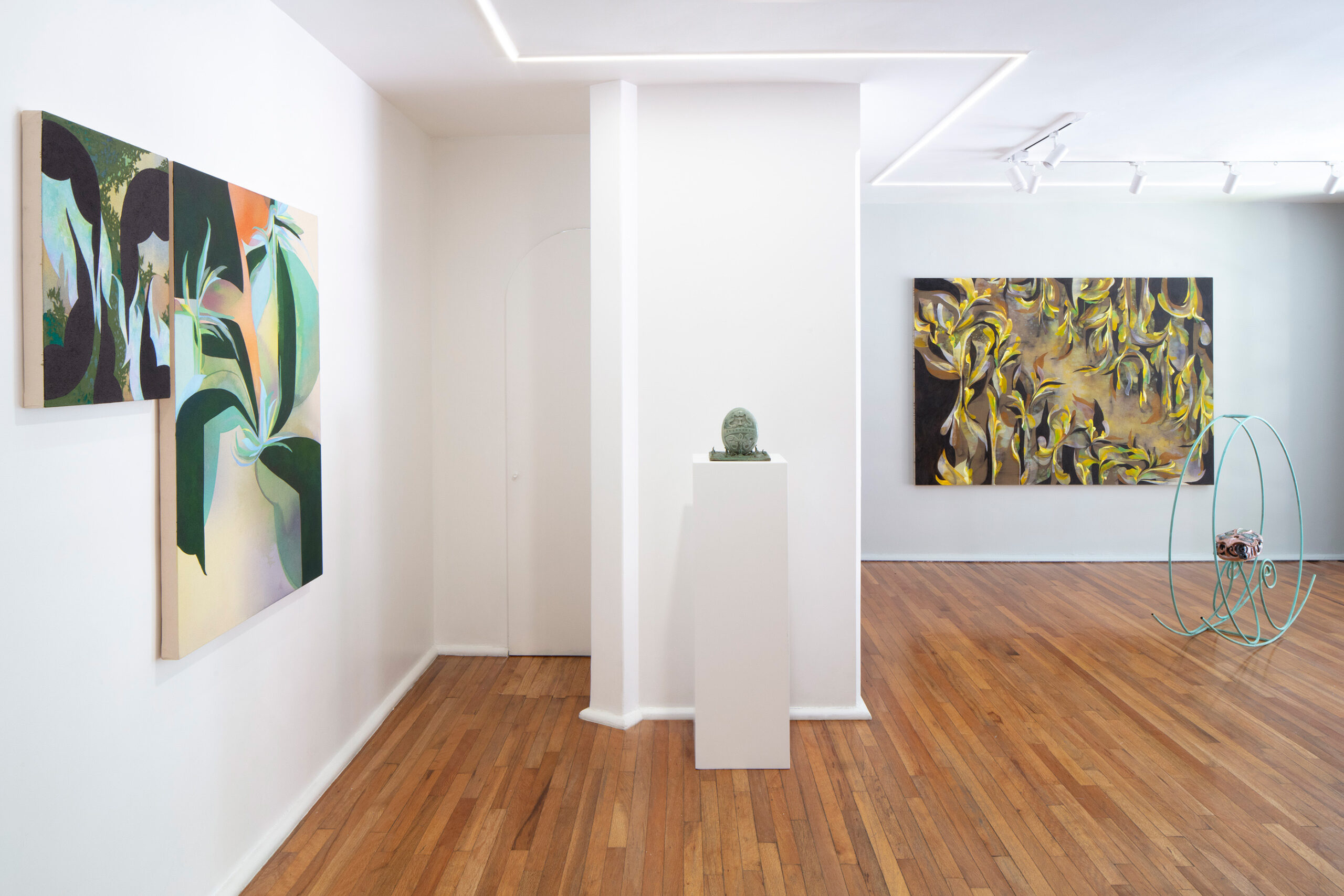
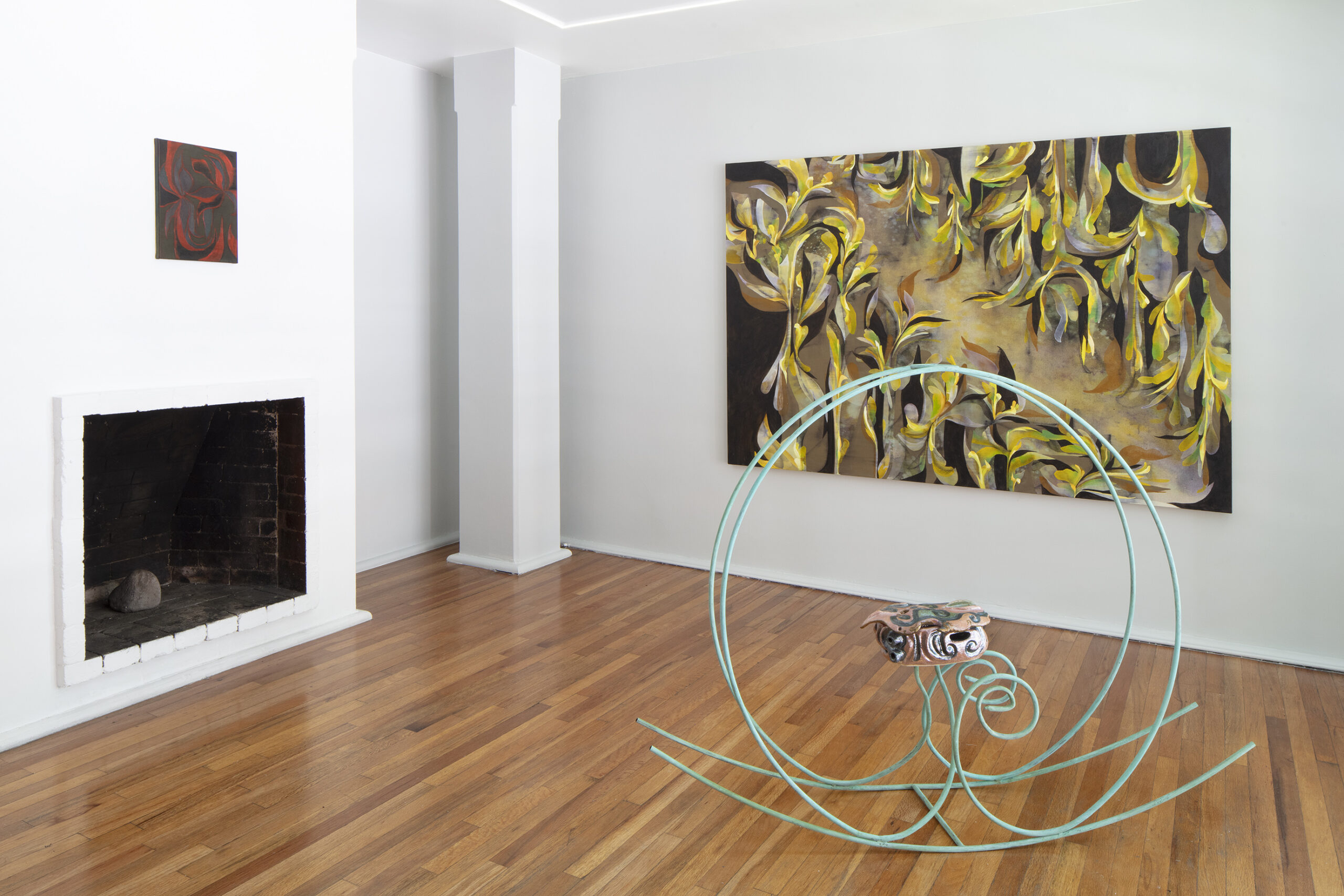
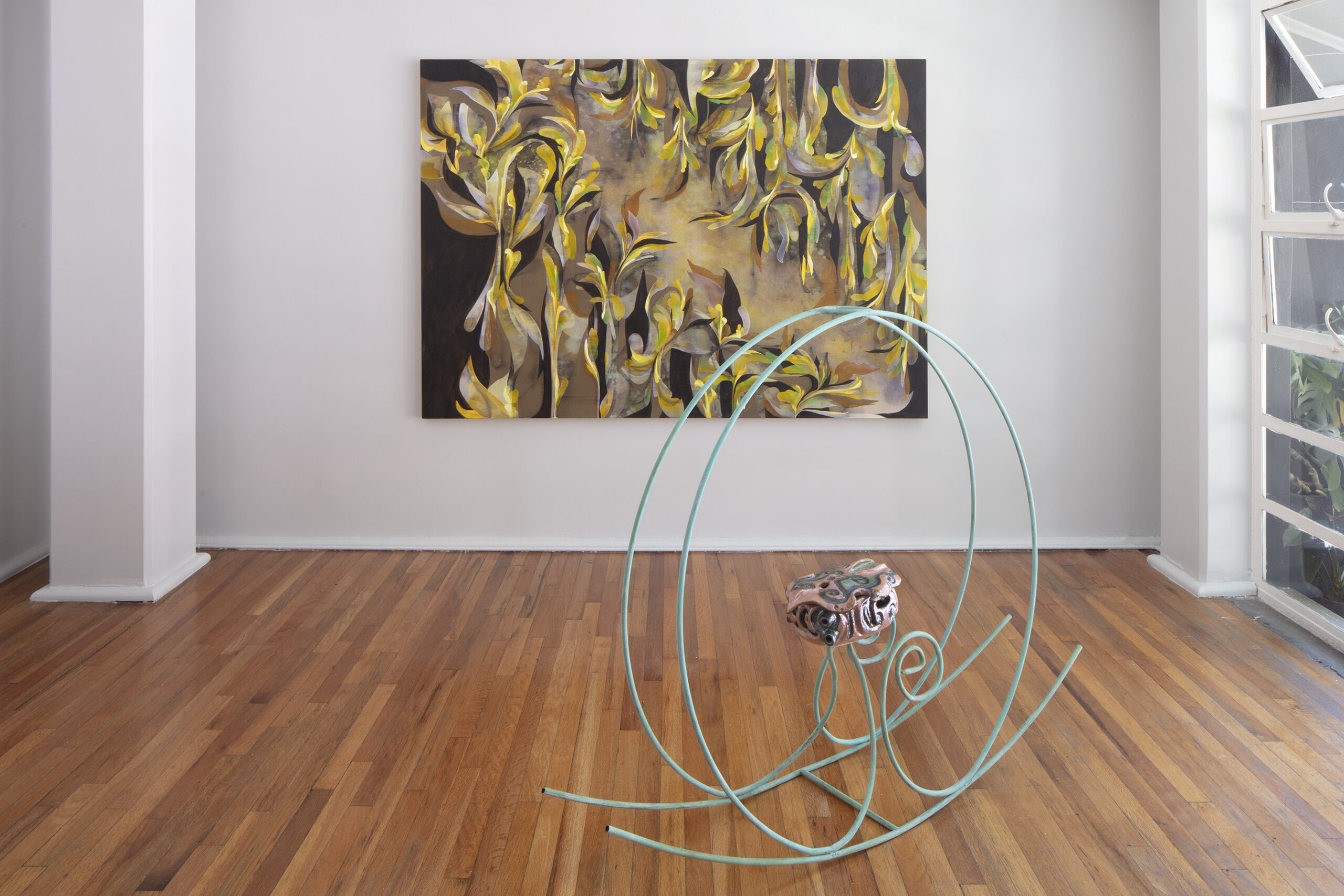
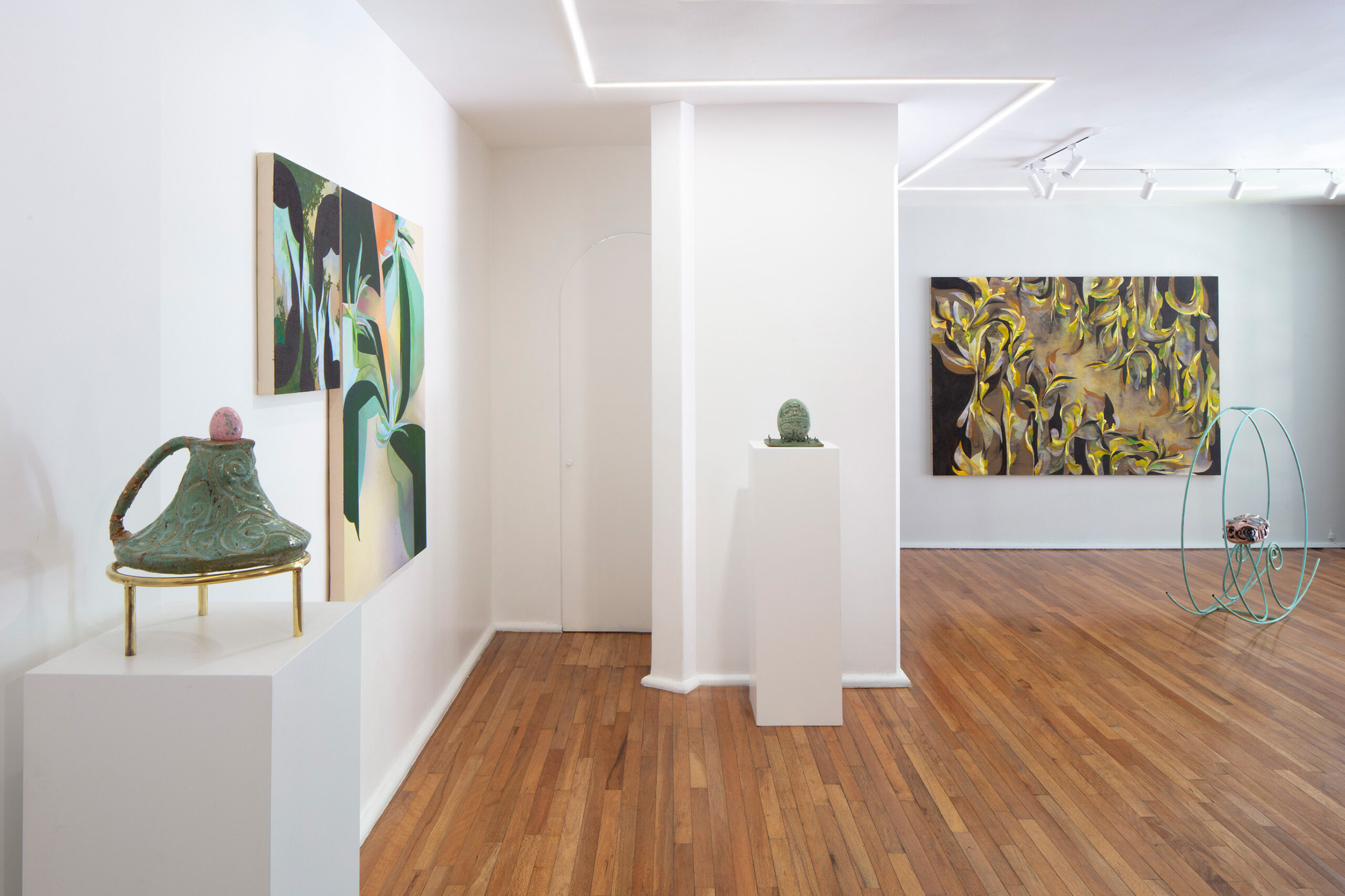
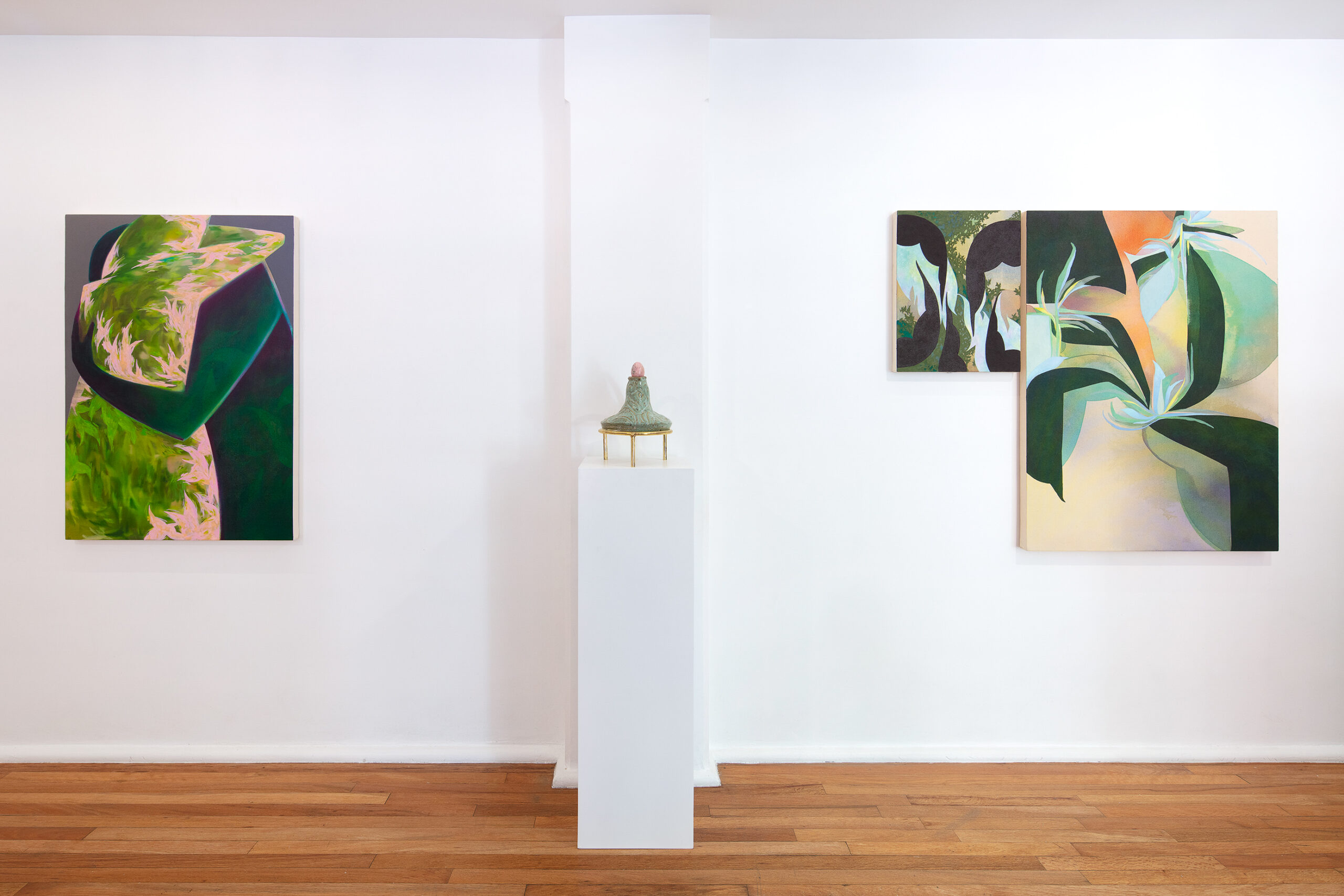
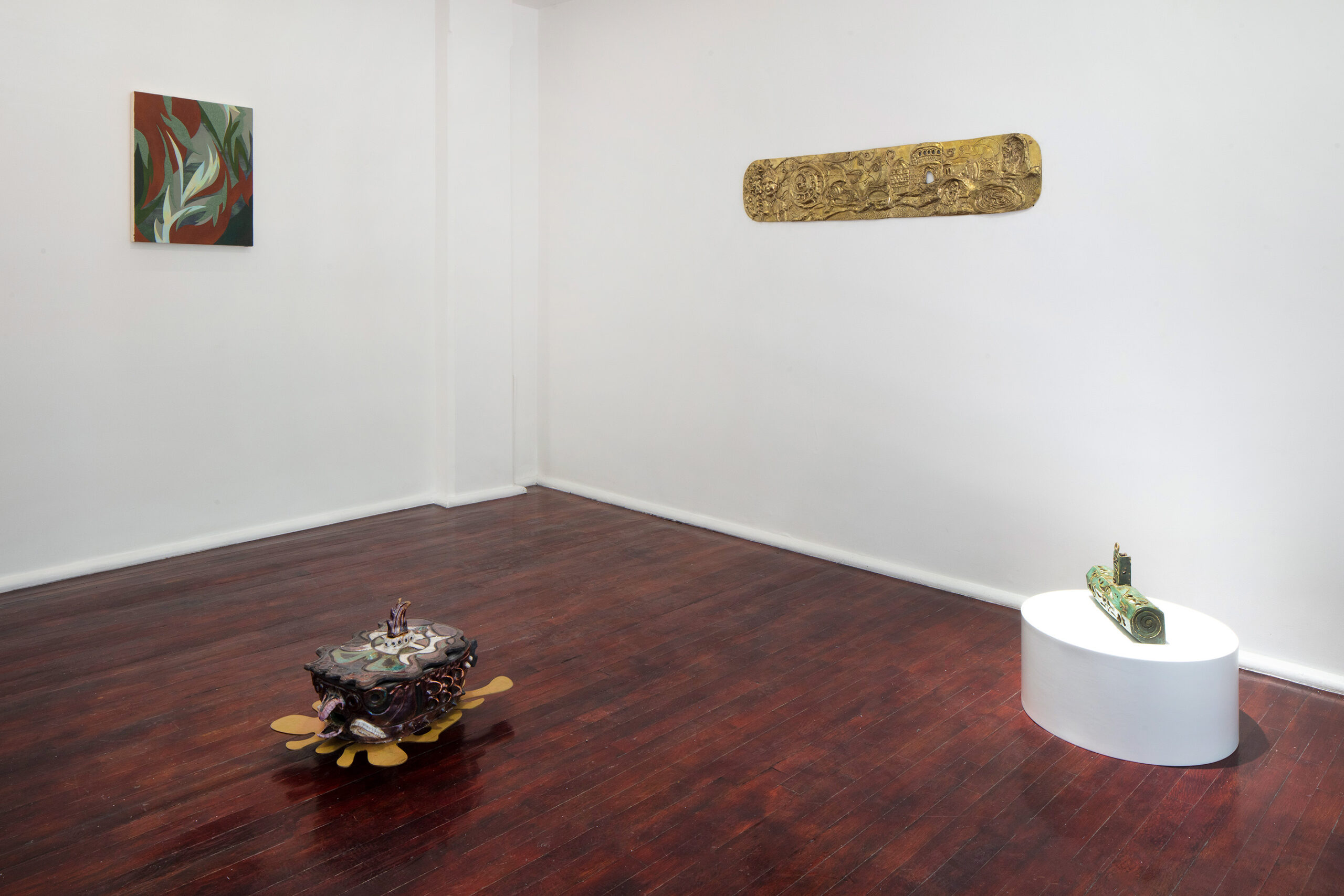
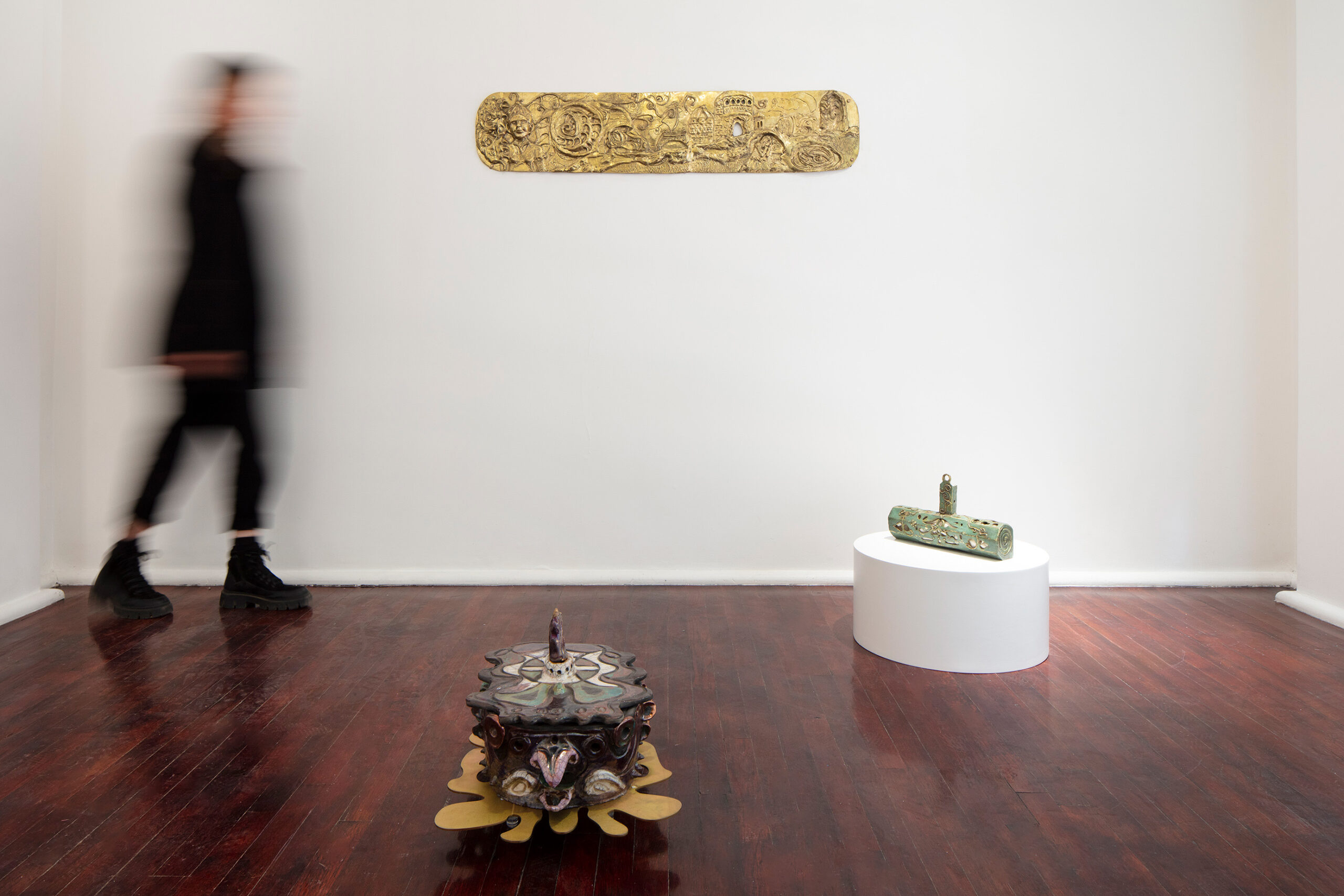
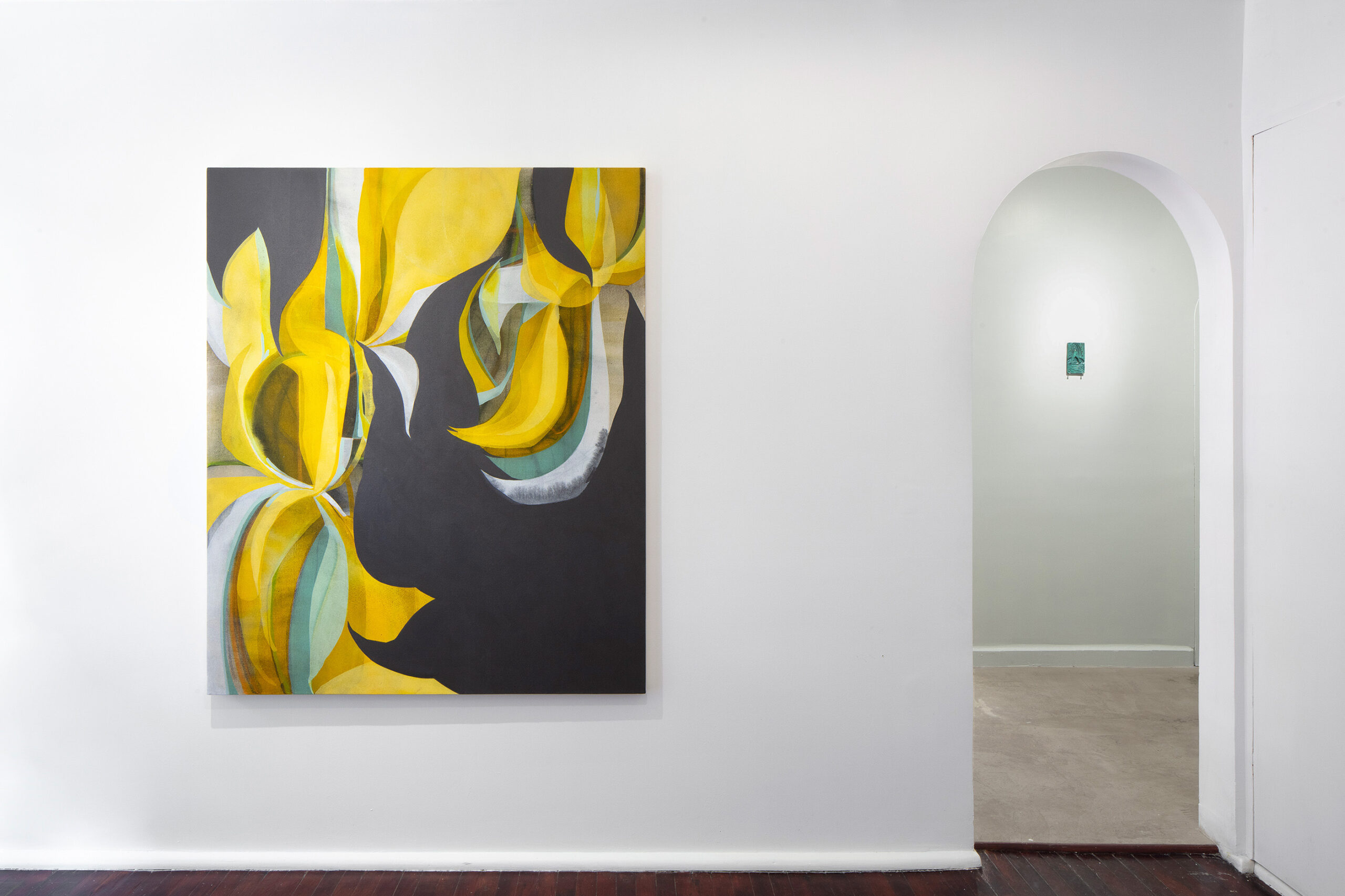
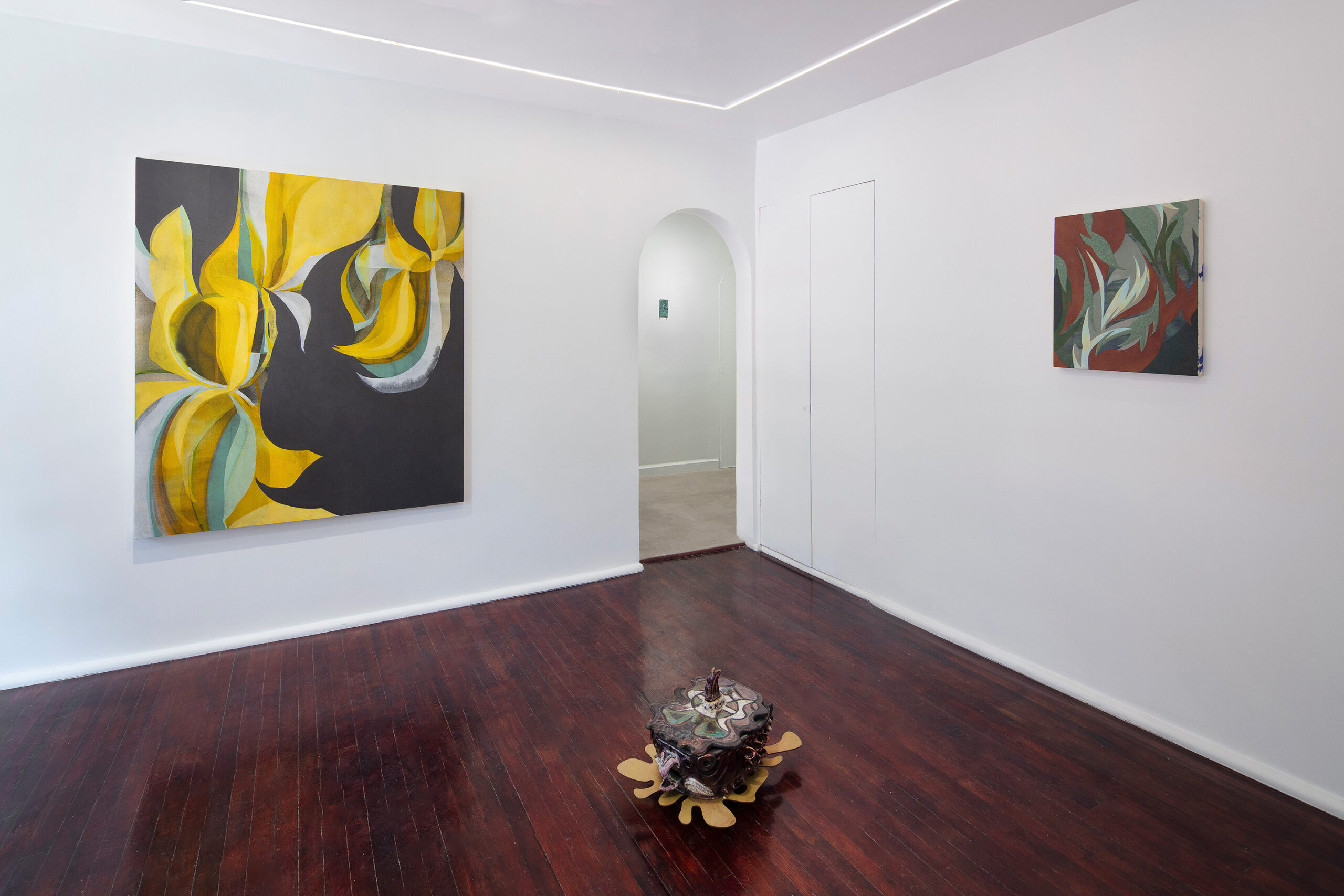
Rooted in an exploration of contact, exchange, and connection, WHAT TOUCHES, WHAT HOLDS serves as a meditation on relationality and the alternative modes of knowing that can unfold beyond dominant systems of representation and control. Bringing together the practices of Mariana Garibay Raeke and Manuela Riestra, this exhibition proposes the body and object –be they human or nonhuman– as sites where visible and invisible forces coexist and engender new forms of cognition. Conceptualizing form as a container or vessel that holds sensation, memory, affect, and presence, both artists move beyond anthropocentric frameworks by enacting situated modes of sensibility that challenge hierarchical and extractive forms of knowledge.

Thus turning making into an act of co-constituting worlds, where artworks exceed language or fixed meaning and turn into spaces of encounter, speculation, and transformative relation. Conversing with a lineage of artists who have approached form as a vessel for experience and sensation rather than as an object for contemplation or mastery, Garibay Raeke and Riestra’s works resonate with the embodied and ritual practices of Ana Mendieta and Lygia Clark, the vibrational abstractions of Hilma af Klint and Emma Kunz, and the expanded material and sculptural languages of Eva Hesse and Rebecca Horn. Together, these genealogies frame their practices as part of a feminist and ecological continuum that speaks to fragility, extension, and situated responsiveness.

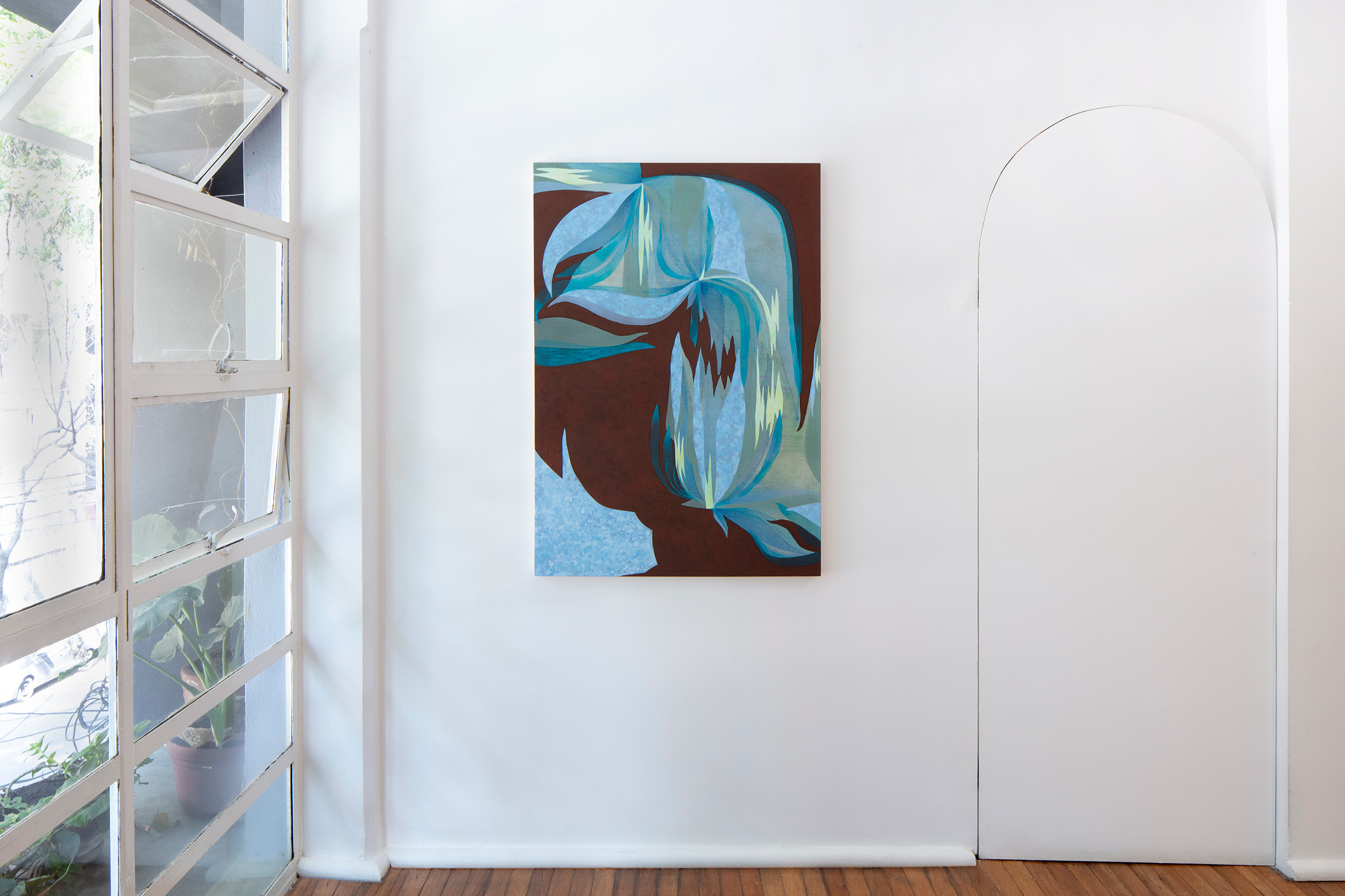
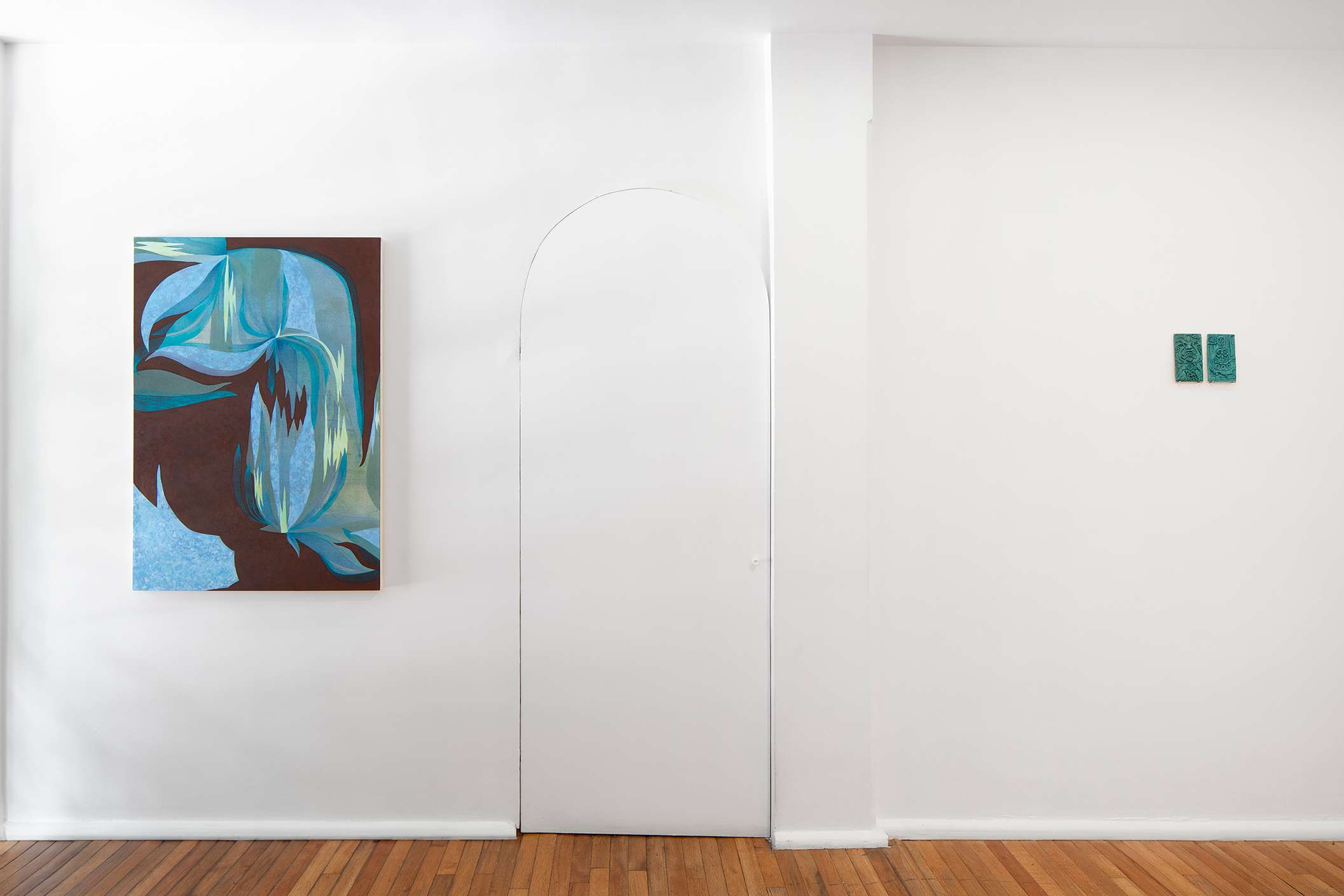
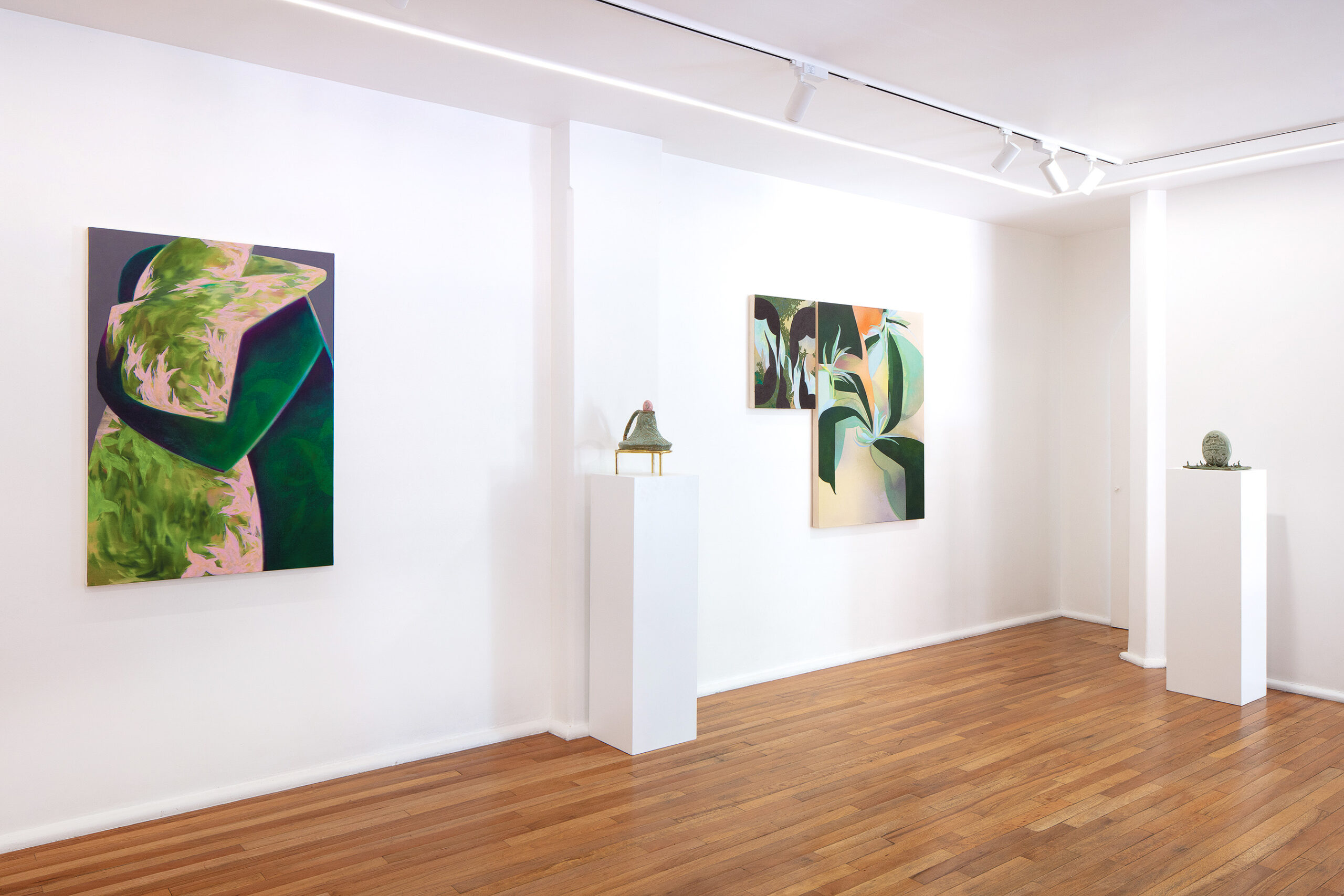
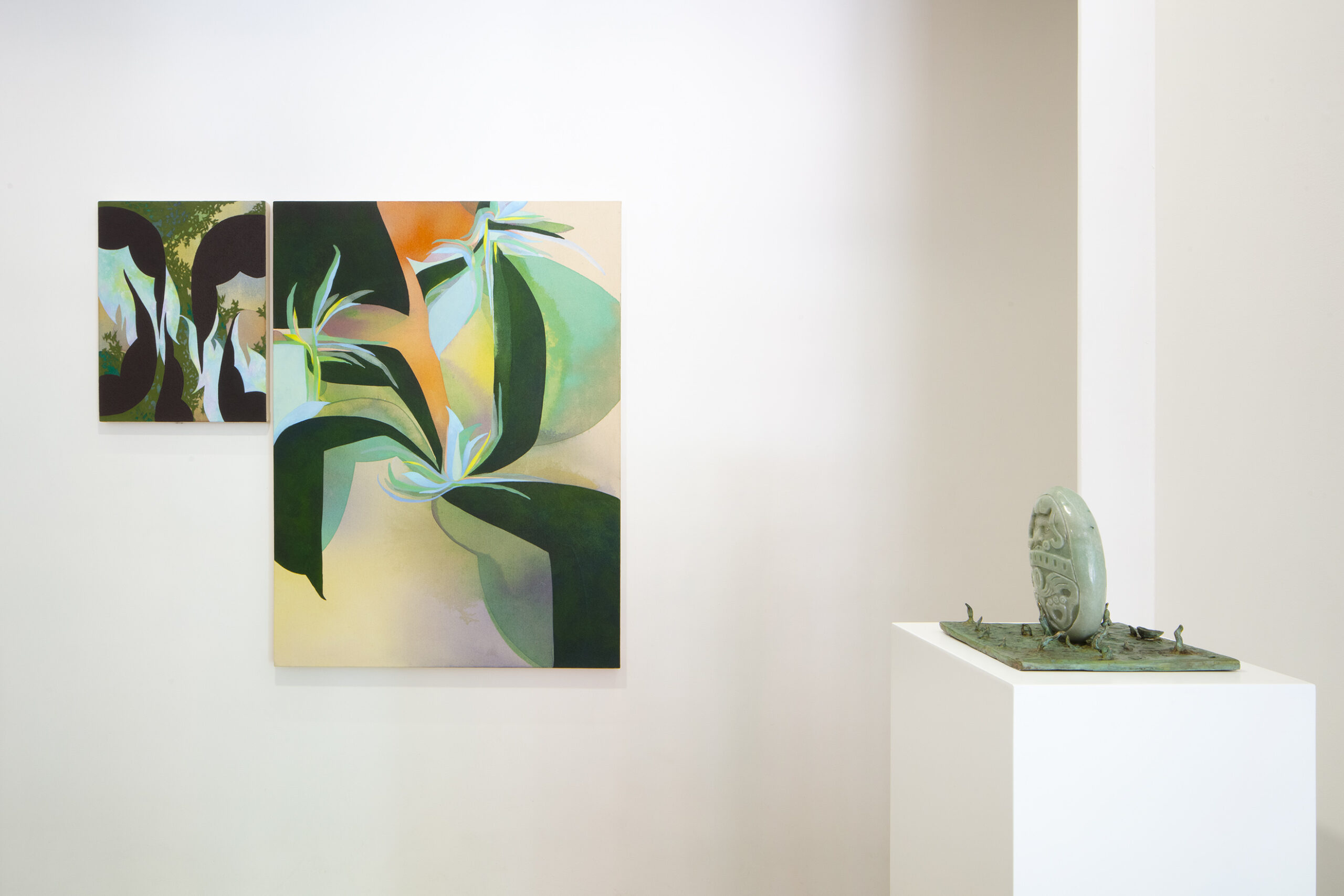
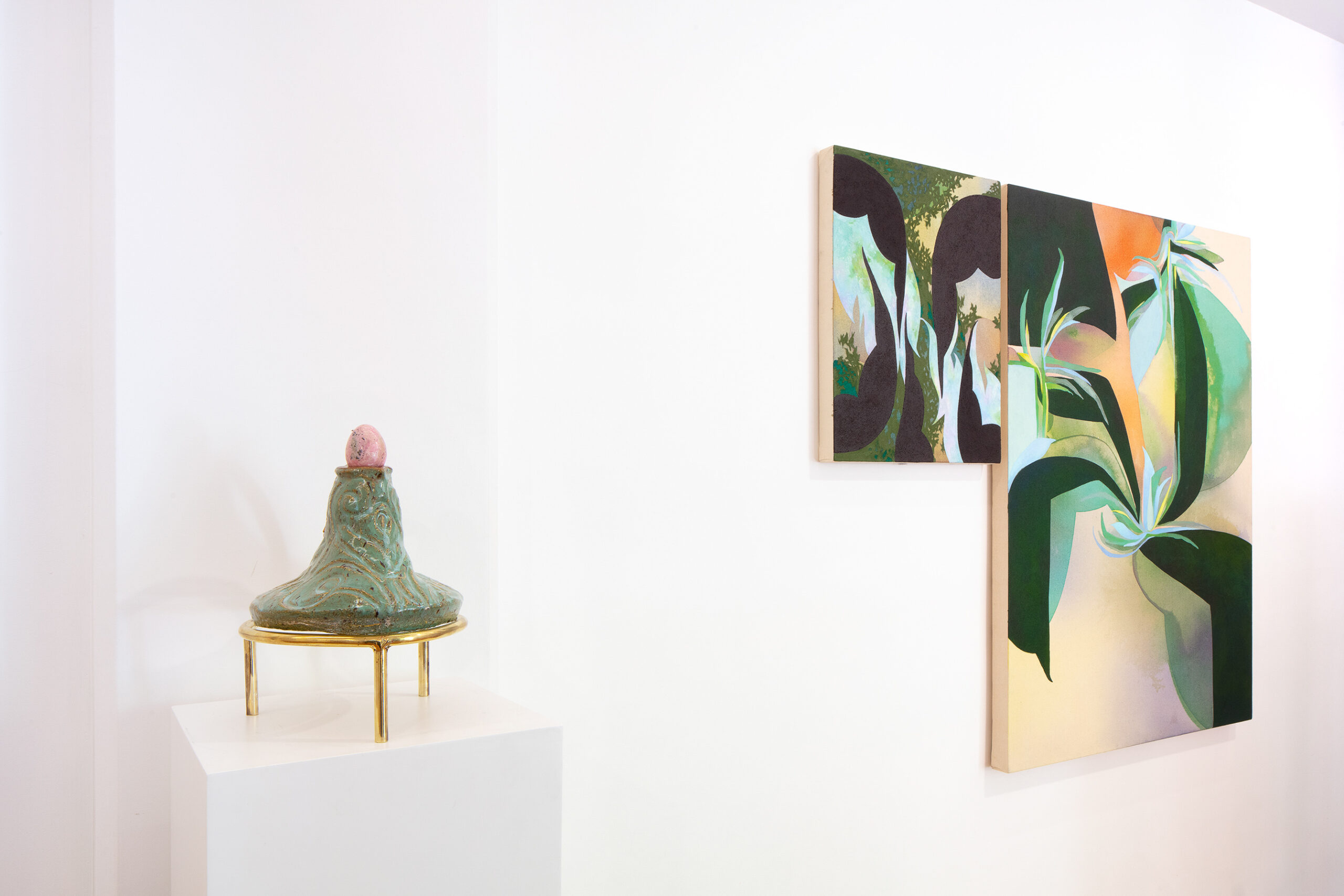
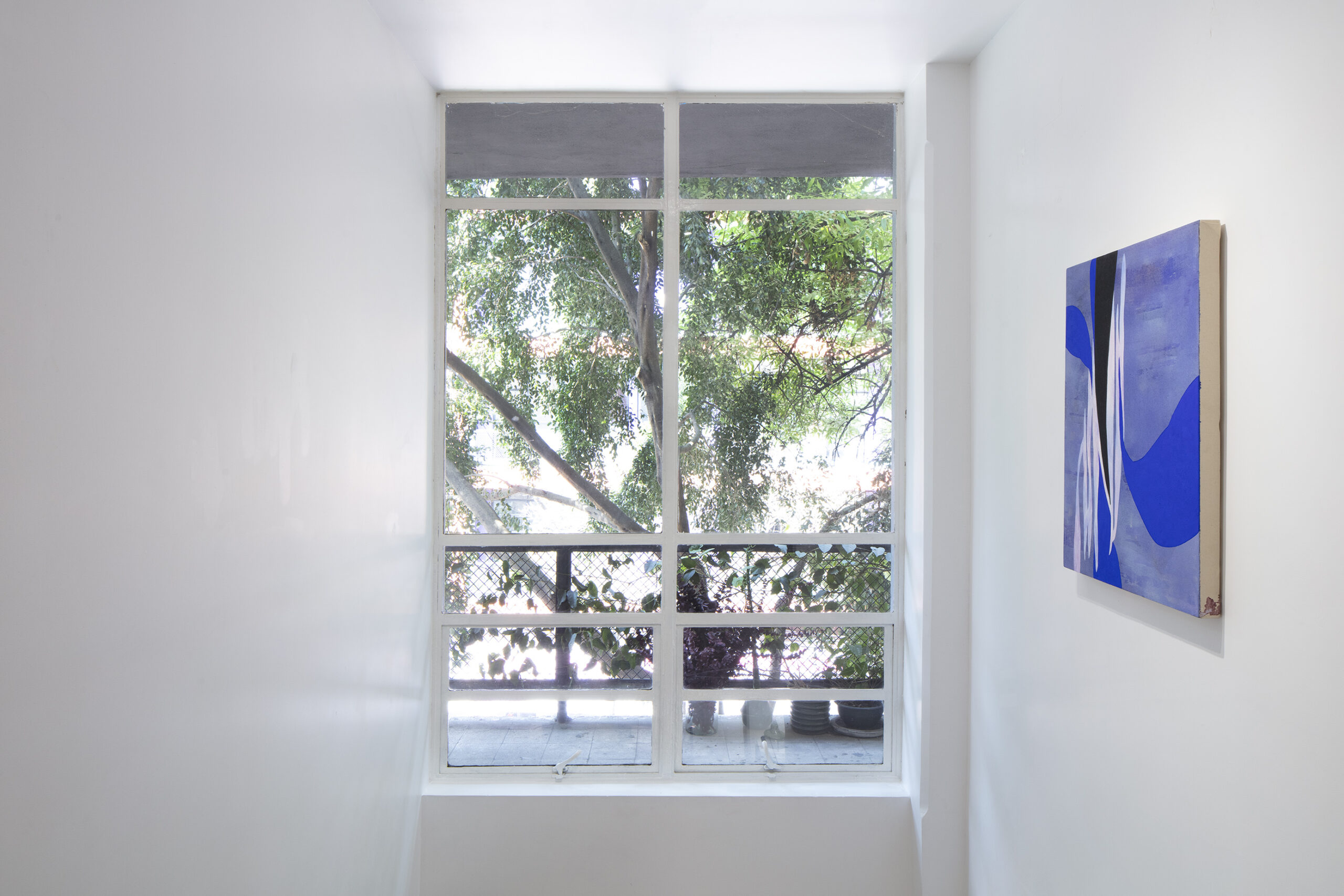
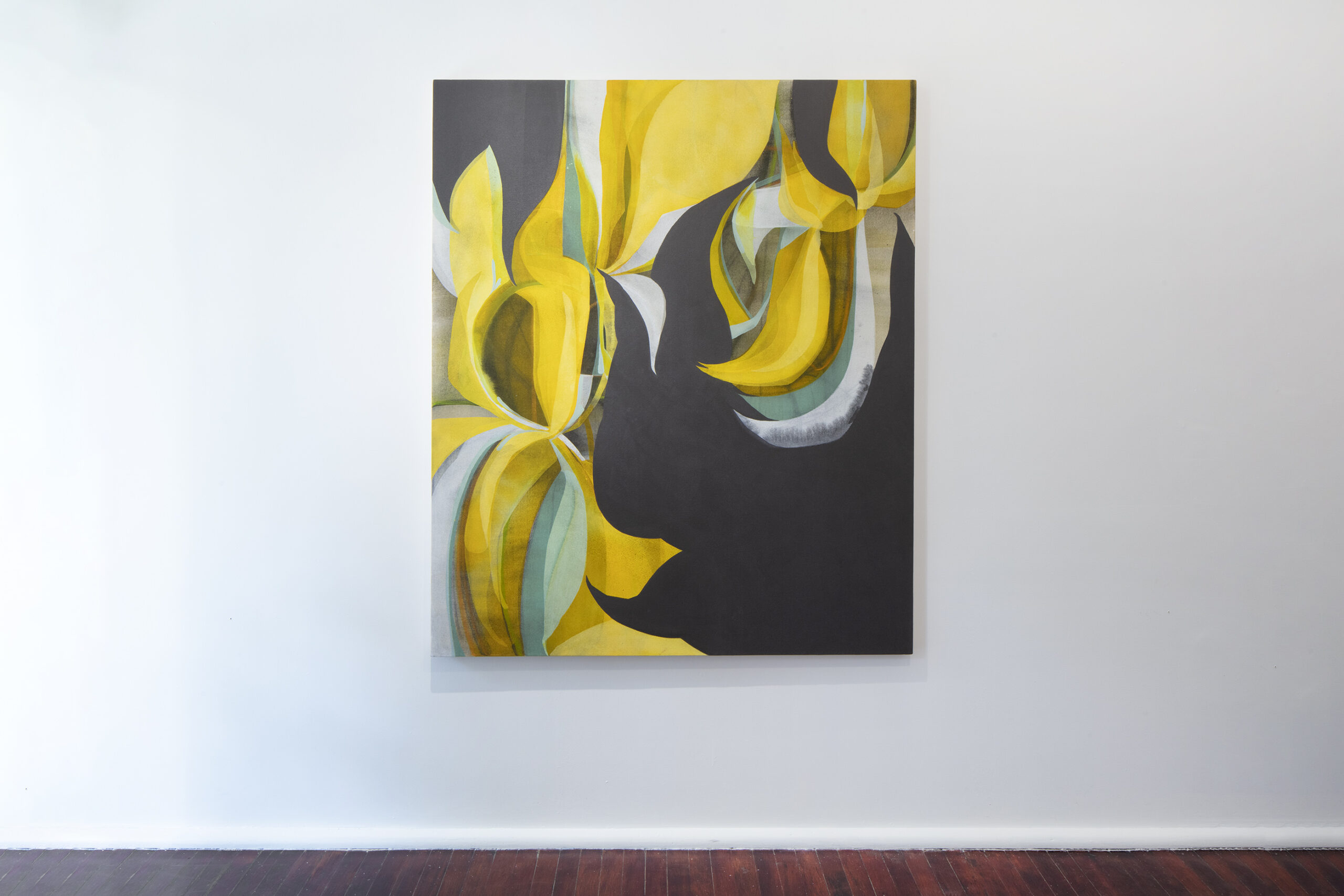
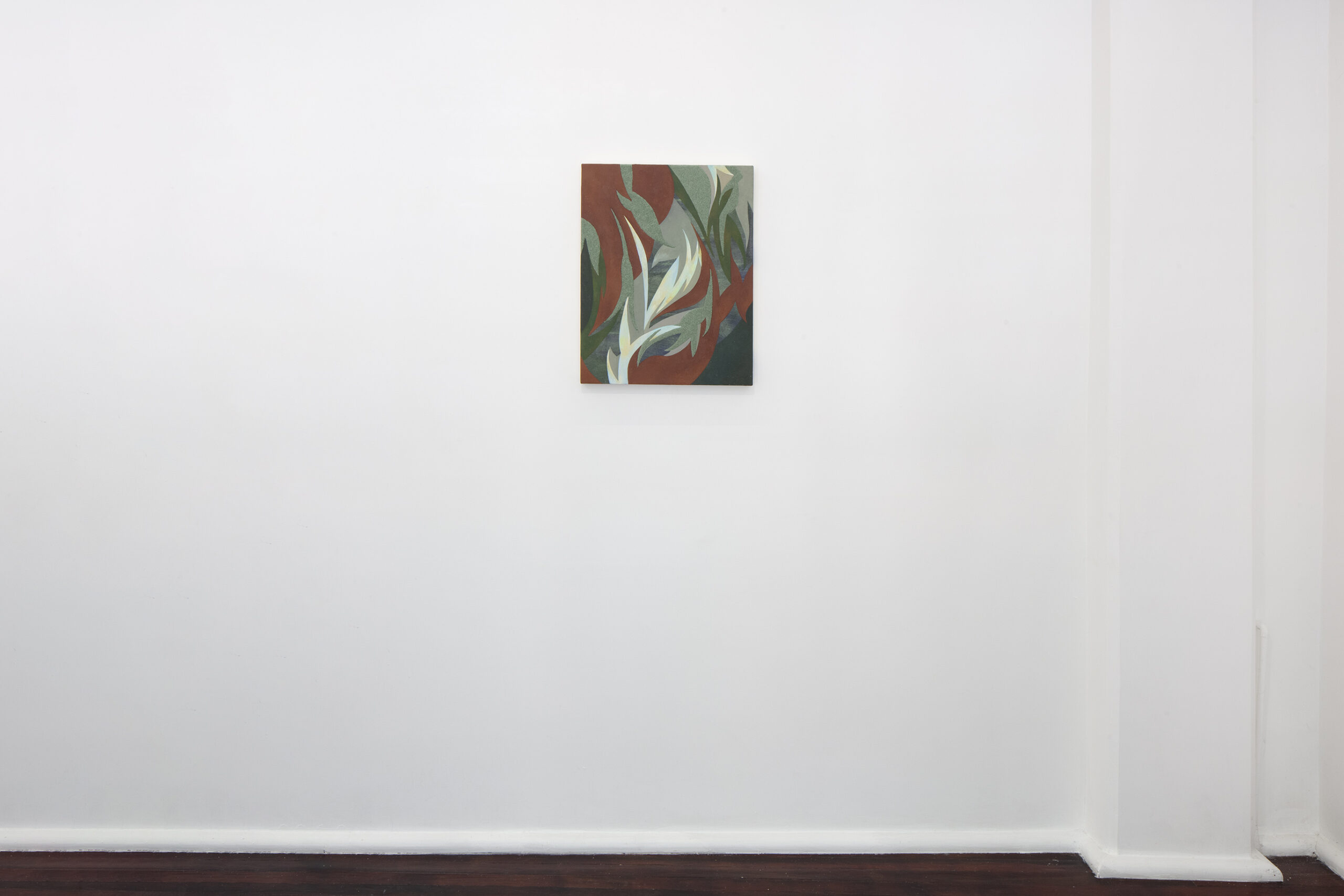
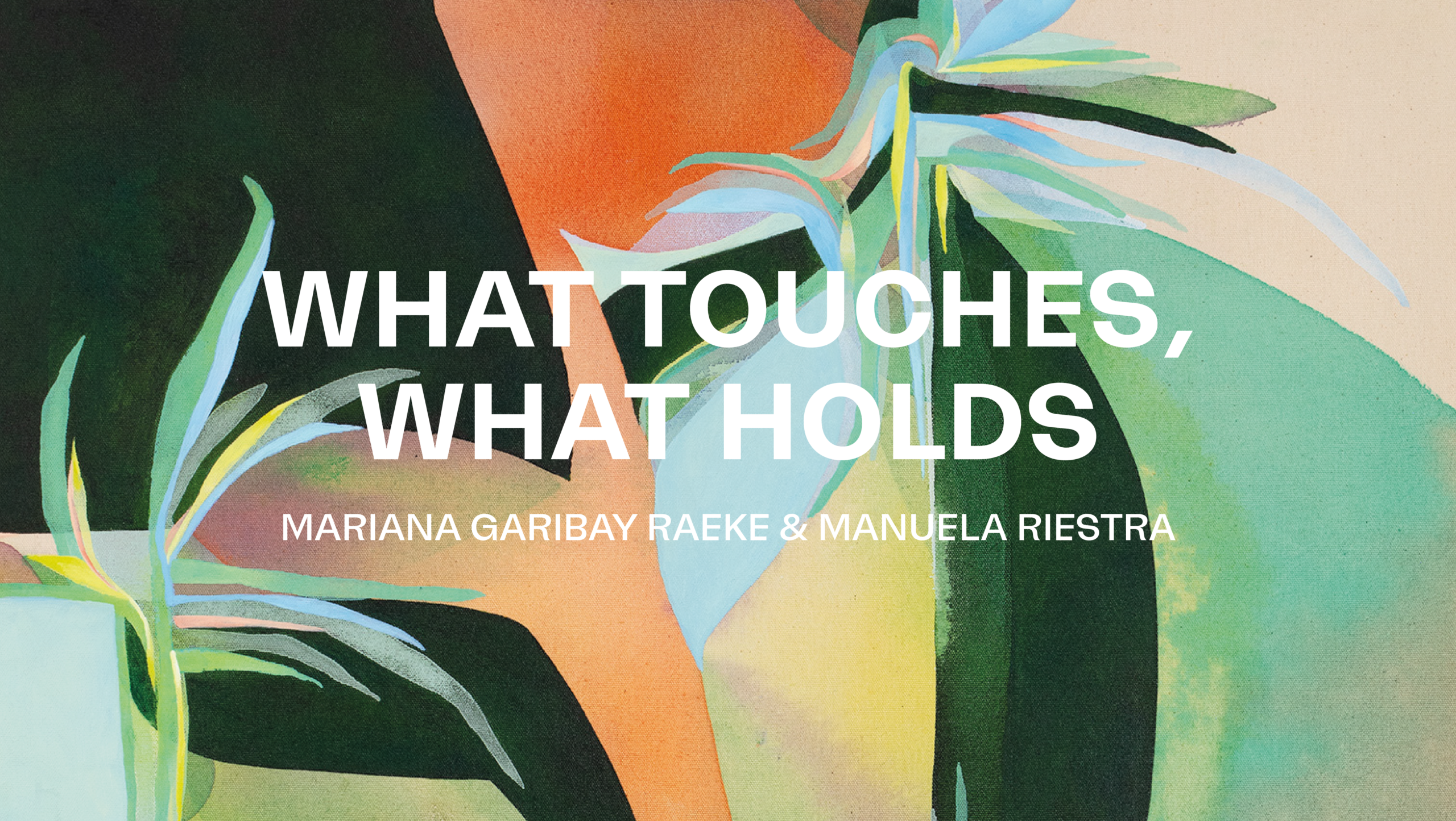
Centered on the body as a living and permeable territory, Garibay Raeke’s paintings explore that which is felt rather than seen. Interior states, residues of memory, and embodied sensations are manifested through color, layered surfaces, and silhouetted forms that allude to nature and the corporeal. What seems like limbs or vegetation extend through her surfaces, becoming symbols for exchange, embrace and growth. While the canvas becomes a receptacle within which other types of bodies –plant, mineral, animal, or otherwise– emerge and coexist. Working intuitively, she treats painting like a phenomenological space where color becomes a mode of contact capable of translating the ways in which we experience the world and transmitting that which cannot be articulated in words. Her use of meticulously layered paint mediums speak of temporality and material intimacy, while the persistent presence of the natural extends the work into a dialogue with hybridization and cyclical transformation. Materially investigating the residue of experience, her pieces challenge the processes and systems that shape substances into objects with particular meanings, thus dissolving their edges, deconstructing, and reimagining that which remains familiar

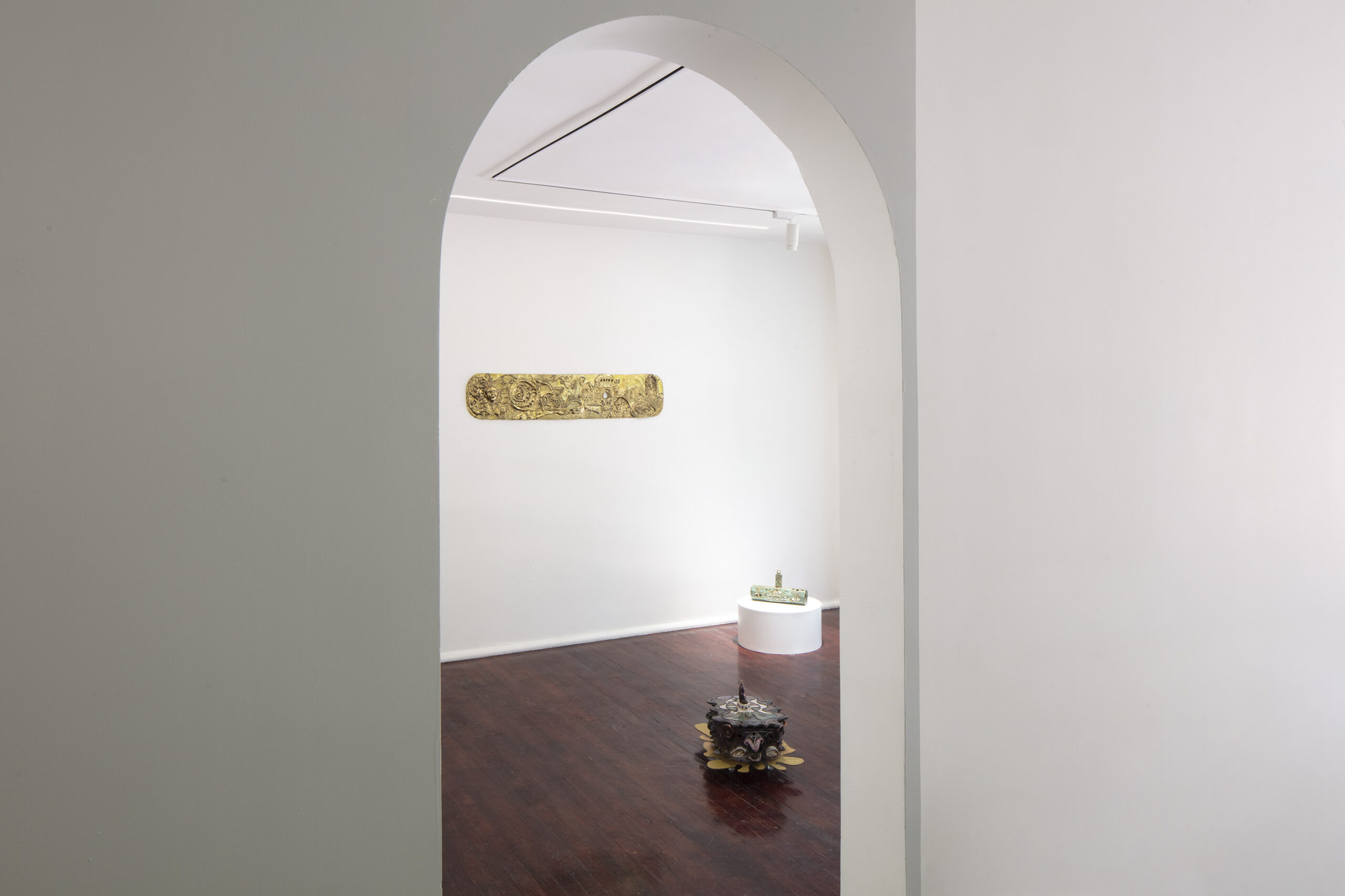
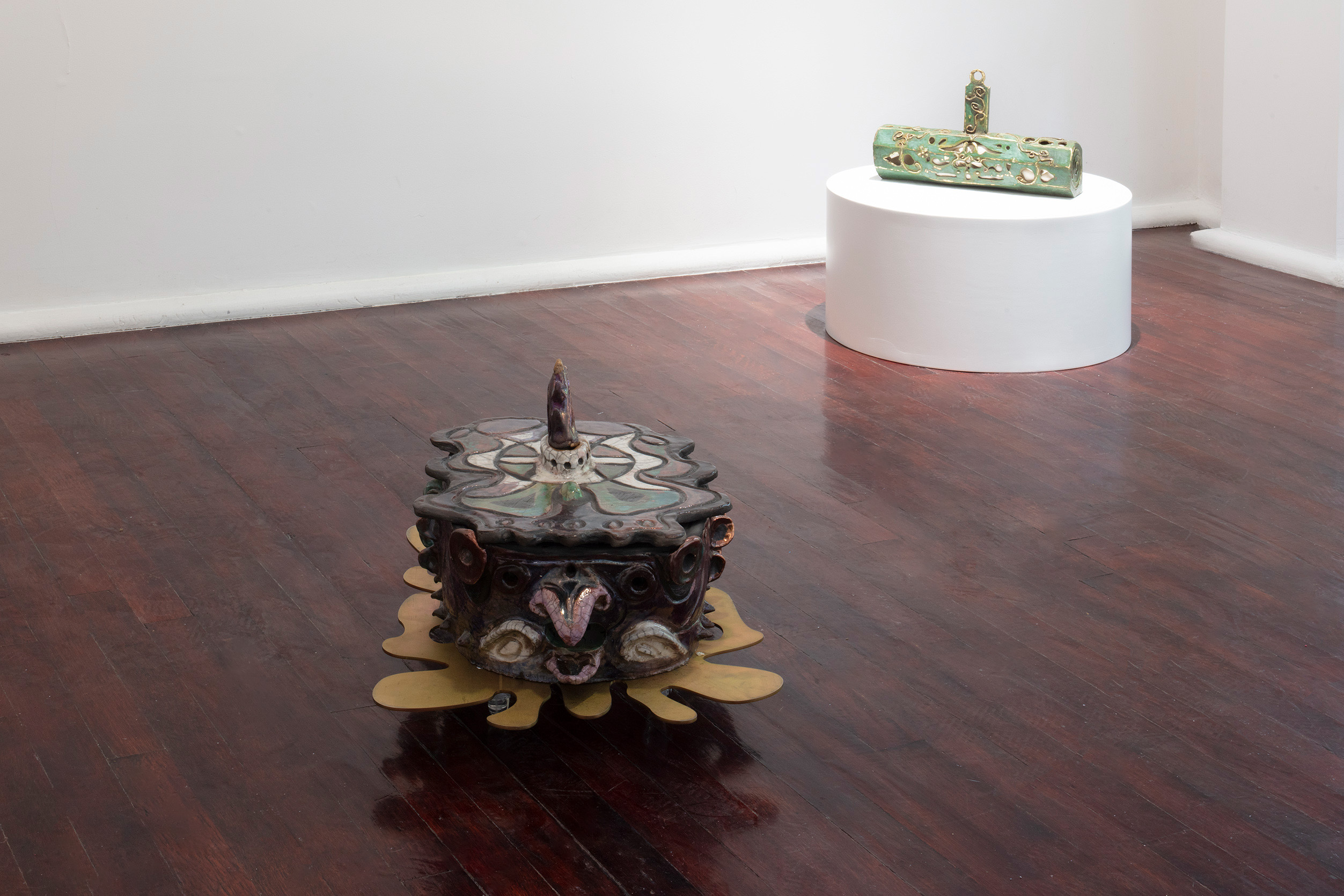
Riestra’s sculptural practice similarly inhabits the threshold between the material and immaterial, where objects emerge as sensitive entities endowed with inner life. Moving beyond ideas to penetrate reality, her work engages ecological urgency and ethical re-imagination through sculptures that collect, store, and transform emotional residues into light, sound, or movement. Addressing a future in which water has been displaced from everyday experience and stripped of its sacred dimension, Riestra’s machines become illuminated through tears and thus propose an ethical and symbolic response to the capitalist reduction of nature to mere resource. Equipped with sensors, codes, and internal programs, her works respond to touch, sound, and voice, blurring distinctions between machine and organism, soul and matter. Drawing on ancestral cosmologies such as the cult of Tláloc or the Shinto notion of kami —not gods but presences or forces that appear— she seeks to re-sacralize that which has been emptied of spirit. Influenced by Ursula K. Le Guin’s Carrier Bag Theory of Fiction, her sculptures open pathways for mutual listening and imaginative engagement. Rather than aiming to resolve or transform the world, her sensitive machines offer a vessel for that which has not yet been named, yet insists on appearing.

Suggesting a form of promiscuous knowledge, in the sense proposed by Anna Tsing, Garibay Raeke and Riestra are deeply interested in dissolving boundaries. From this perspective, the artists consider how meaning emerges through proximity, attention, and shared presence. In this space, touch becomes a mode of thought, holding becomes an ethic of care, and understanding unfolds through slowness, shared presence, and the rhythms of coexistence. Inviting viewers to enter into these fields of relation not as detached observers, but as responsive participants, Garibay Raeke and Riestra ask us to become attuned to vulnerability, reciprocity, and care. Rather than offering resolution or mastery, WHAT TOUCHES, WHAT HOLDS lingers in a generative in-between —where bodies, objects, and forces meet— proposing relationality itself as a site of resistance and renewal in a world shaped by fragmentation and extraction.


Thus turning making into an act of co-constituting worlds, where artworks exceed language or fixed meaning and turn into spaces of encounter, speculation, and transformative relation. Conversing with a lineage of artists who have approached form as a vessel for experience and sensation rather than as an object for contemplation or mastery, Garibay Raeke and Riestra’s works resonate with the embodied and ritual practices of Ana Mendieta and Lygia Clark, the vibrational abstractions of Hilma af Klint and Emma Kunz, and the expanded material and sculptural languages of Eva Hesse and Rebecca Horn.

Centered on the body as a living and permeable territory, Garibay Raeke’s paintings explore that which is felt rather than seen. Interior states, residues of memory, and embodied sensations are manifested through color, layered surfaces, and silhouetted forms that allude to nature and the corporeal. What seems like limbs or vegetation extend through her surfaces, becoming symbols for exchange, embrace and growth.

Riestra’s sculptural practice similarly inhabits the threshold between the material and immaterial, where objects emerge as sensitive entities endowed with inner life. Moving beyond ideas to penetrate reality, her work engages ecological urgency and ethical re-imagination through sculptures that collect, store, and transform emotional residues into light, sound, or movement.

In this space, touch becomes a mode of thought, holding becomes an ethic of care, and understanding unfolds through slowness, shared presence, and the rhythms of coexistence.

Inviting viewers to enter into these fields of relation not as detached observers, but as responsive participants, Garibay Raeke and Riestra ask us to become attuned to vulnerability, reciprocity, and care. Rather than offering resolution or mastery, WHAT TOUCHES, WHAT HOLDS lingers in a generative in-between —where bodies, objects, and forces meet— proposing relationality itself as a site of resistance and renewal in a world shaped by fragmentation and extraction.
ARTWORKS

Jarra, 2025
High-fired ceramic, brass, and rhodonite
17 x 19 x 17 cm
Viento Suave, 2026
Oil, acrylic binder and pigment on canvas
120 x 90 cm
HOLD ME FOR A MINUTE IM A BBY, THEN PLANT AND WATER ME EVEN IF I CAN´T GROW BECAUSE IM A ROCK AND MY SOIL IS METAL, 2025
Aventurine and lost-wax cast bronze
23 x 23 x 19 cm
Noche Despierta, 2026
Oil, acrylic binder, pigment, and charcoal on canvas
155 x 130 cm
Clementina, 2025
High-fired ceramic with a third lustre firing, patinated brass, and electronics
120 x 155 x 25 cm
Flor de Sal, 2026
Oil, acrylic binder and pigment on canvas
115 x 80 cm
CHILLONA CASIMIRA, 2025
High-fired ceramic with lustre third firing, tropicalized steel, electronics, and tires
40 x 58 x 50 cm
Campo Abierto, 2026
Oil, acrylic binder, pigment, and charcoal on canvas
150 x 215 cm
Agua saltarina, 2025
High-fired ceramic with lustre third firing, tropicalized steel, electronics, and tires
25 x 56 x 40 cm
Contrapuntos, 2026
Oil, acrylic binder, pigment, and charcoal on canvas
57 x 45 cm
CHILLONA CEFIRO, 2025
High-fired ceramic with lustre third firing, tropicalized steel, electronics, and tires
25 x 56 x 40 cm
Incandesente, 2026
Oil, acrylic binder, and pigment on canvas
40 x 30 cm
Entramados, 2026
Oil, acrylic binder and pigment on canvas
115 x 80 cm
ME PERDÍ Y NO SE COMO REGRESAR, 2025
Lost-wax cast bronze
130 x 29 cm
Señora, 2025
Lost-wax cast bronze with patina
16 x 9 cm
LLÓRAME, 2025
Lost-wax cast bronze and electronics
35 x 20 x 9 cm
Grumpy little god, 2025
Lost-wax cast bronze with patina
16 x 9 cm
DOWN IN MY SECRET PLACE, 2025
Lost-wax cast bronze
16 x 9 cm
Serpentinas, 2026
Oil, acrylic binder and pigment on canvas
58 x 46 cm
A Destiempo, 2026
Oil, acrylic binder, pigment, and charcoal on canvas
75 x 60 cm

    ENQUIRY